

PHATHYR'S SERMONS AND STORIES Sermons and Stories by an Episcopal Priest in drizzly, damp Seattle. Send emails to Phathyr@gmail.com.
Friday, December 30, 2011


Monday, July 4, 2011
3 July 2011 - Independence Day (Observed)
As you can tell by these fancy brocade duds, I’m a clergyman. But at heart, I’m an historian. I wound up in this vocation by my love of history. One of the things about history is that it’s written by the victors. History is therefore somewhat subjective. It’s always slanted. But every history has its dark side. From the pages of some obscure journal or other source, one can always find out what the vanquished experienced and from the stories of the victors and the vanquished, a more reasonable facsimile of the truth can emerge.

The American Revolution was a glorious cause. The tyranny and oppression of the British were over the top. The Revolution was long overdue. And yet, even our own Revolution had its dark side. We don’t hear about the atrocities inflicted by the Colonial Army. But they happened. They happen in every war, even for the most just cause.
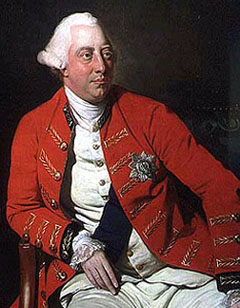
 King George III
I suspect none of us learned in our history textbooks in school how the Church of England in the Colonies suffered. It did. Greatly. Our textbooks omit the fact that not just a few Anglican churches and rectories were burned to the ground, frequently with the occupant inside, by the Colonial troops and the property taken. We hear nothing of the Anglican priest slaughtered at their Communion Tables or those dragged from their high, three tiered pulpits and hanged in the Church yard. We hear little about the throngs of Anglicans, laity and clergy alike, who abandoned the Church during the Revolution for the Presbyterian and newly forming Methodist churches because they no longer wanted to be associated with the Crown. It’s one of the reasons those denominations have always been larger than us.

But when the dust settled and the British had finally gone home, what had been the Church of England in the Colonies was in shambles. There had been really not much organization. The colonial Church had been a missionary district of the Diocese of London and now with those ties broken there wasn’t even that. There were no bishops; just a large mass of demoralized and frightened men.
These men, the priests of the Church of England, took their lives very seriously. Ordination in those days was a pain in the neck. After one had been duly educated at one of the universities, arrangements were made in the autumn for the ordinations to take place. In the spring, after the weather had gotten nicer, these men were put on board ships to make the long, arduous and boring journey across the Atlantic where they docked at Portsmouth or Southampton. There they were met by carriages which took them north to St. Paul’s Cathedral in London where that evening they were ordained deacon and the next morning to the priesthood. Then they were packed back up into the carriages which headed south again to catch the ships and the next high tide. No time for the Tower of London and Big Ben was still not even a dream.
During these ordinations, each candidate took an oath to the death to the King who was, after all, the head of the Church. It was a sacred oath, one not taken lightly and to which each candidate owed his honor and his integrity. This was an oath as important as their marriage vows and could never be broken.
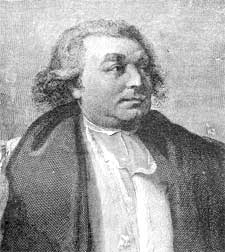
 Bishop Seabury
In 1784, the Reverend Samuel Seabury, Rector of Christ Church, Hartford Connecticut, intimidated the local clergy into electing him their bishop. Seabury was an arrogant somebody and somewhat of a bully who made the long trip across the Atlantic to be consecrated bishop. But when he presented himself with all the testimonials to his fitness to be a Successor to the Apostles, the Bishop of London asked him if he would take the oath of allegiance to the King. Seabury replied, “Well, of course not!” The Bishop replied, “Then I cannot ordain you.” Then under his breath, the Bishop said, “But I know someone who can!”
So, The Reverend Mr. Seabury made his way north to Scotland to the Bishop of Aberdeen, a Bishop of the Scottish Episcopal Church, not to be confused with the Church of Scotland, that bastion of Calvinistic Presbyterian heresy which is a whole other sermon in itself! The Bishop of Aberdeen agreed to consecrate Seabury, but on two conditions: 1, that the new American Church be named after the Scottish Church – “Can’t very well go on calling it the “Church of England,” now can you”; and that the new American Church use the Communion of Liturgy of the Scottish Church rather than that of the Church of England. This was actually a blessing to us all since the Communion Liturgy of the Church of England is rather strange – one receives Communion in the middle of the Eucharistic Prayer after the Words of Institution. Go figure. Archbishop Cranmer must’ve been having a bad day. In any event, Mr. Seabury was consecrated and returned to Christ Church, Harford, now Christ Church Cathedral, as the Right Reverend Samuel Seabury, Bishop of Connecticut.
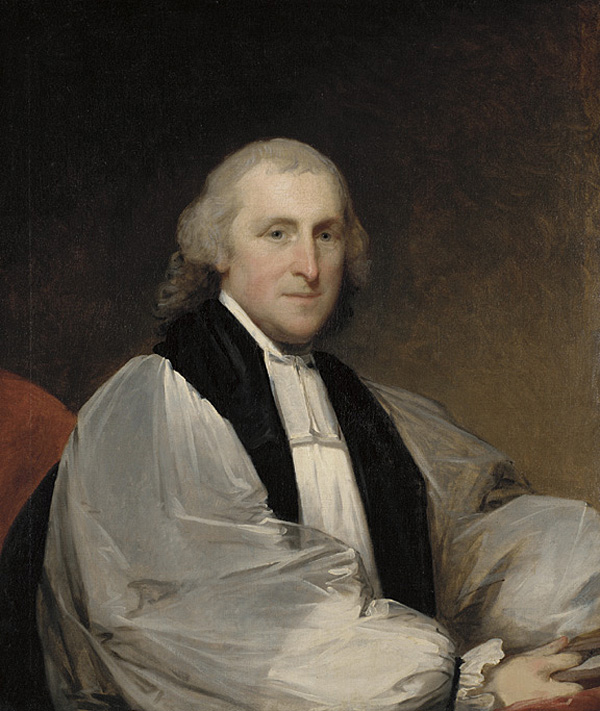
The next year, the Reverend William White, soon to be the first man actually elected by the Church as bishop, called for a conference of what was left of the Anglicans in what had been the Colonies to assemble at his parish Church, Christ Church, Philadelphia, to hammer out what an American Church might look like. Christ Church Cathedral still stands to this day and is a vibrant, active parish in the old part of Philadelphia. It’s an old Georgian building with galleries around three sides, painted white inside with clear glass windows and box pews. It’s gone rather High Church in the last two hundred years. Wonder what Bishop White would think of that? In any event, on a hot, July day in 1785, as many as could attend, filled Christ Church: the clergy on the main floor, the laity in the galleries. The clerk of the conference writes that the first day was total bedlam: those who had taken up the Revolutionary cause vs. those who had remained loyal to the Crown. Of course, it was all very polite. For instance, one clergyman would rise to respond to another by saying, “I would like to respond to my beloved Brother in Christ, the Heretic and Traitor from South Carolina…..” This would be followed by applause and booing and stomping and cat calls. (So much for English gentility!) By the end of the day, soon-to-be Bishop White was at his wits end. Nothing had been accomplished except division and fighting.
 Christ Church Cathedral, Philadelphia
And the next day was none the better. After Morning Prayer, the proceeding were take up from the previous day which immediately turned into yet another pie fight. And it got nastier. It wasn’t pretty and Bishop White was by now pulling his hair out. Violence had not yet ensued, but it was well on the way.
 Bishop White
In the midst of this nightmare, the clerk handed Bishop White a note which said that the Reverend Mr. George Brown of New Hampshire wished to address the assembly. Bishop White must’ve thought, “What can it hurt?”
The Reverend George Brown was a nobody vicar from a small parish outside Concord, New Hampshire. He was short, fat and dumpy and beginning to go bald. While highly educated, he spoke with a stammer and was quite an introvert. But his parish adored him. What he lacked in physical attributes, he more than made up in abilities as a pastor.

Over the din, Bishop White yelled, “The Reverend Mr. Brown of New Hampshire has asked to address the conference.” Mr. Brown was seated in the back of the Church and began the long trek down the side isle, there is no central isle, of the Church. He bowed to the Communion Table and shook Bishop White’s hand and then began the long ascent into the three tiered pulpit. These pulpits were three-decker styled, the bottom for the “Clerke,” the middle for the Lay Reader and the top from which the sermon was preached. These were the days before public address systems and the pulpit was topped with a sounding board so everyone could, at least in theory, hear.
Mr. Brown looked out onto the sea of men in black and cleared his throat. He must’ve been petrified, but he mustered up some courage and began to speak: “August Gentlemen, I..” From the back, someone yelled, “LOUDER! WE CAN’T HEAR YOU!” That must’ve soothed Mr. Brown’s nerves! But he went on, a bit louder: “AUGUST GENTLEMEN, Fellow Clergymen, Laymen in the galleries, I have spent the last day and a half as a witness to these proceedings which have been painful and filled with much rancor. And I have searched the innermost workings of my heart to come to some resolution about the matter at hand. We are all men of integrity and high minds, now situated in what seems to have become a new nation. Some of us sided with the cause that has prevailed, all good men, men of integrity and pure heart. But I must admit that I have remained loyal to the Crown and continue to do so. I, as you, took a sacred oath, which in my own mind I cannot betray. And many of you have come to a different conclusion, one with which I do not agree, but which I honor, for you are all men of good will.
“But as I have sat and witnessed these proceedings, I have come to the firm conclusion that I cannot pledge my allegiance to Mr. Washington. And at the same time, I realize that I can no longer pledge my heart to King George. For neither George Washington nor George the Third took flesh of the Blessed Virgin and became one of us. Neither George went to the Cross and have his life for the sins of the world. It was Jesus. It was Christ himself who has called us, neither of the Georges, and it only to him that I can give my heart. And when I look at all of this in such a perspective, the rest becomes unimportant. And so I will continue a priest in whatever this Church is to be named, with only one oath, and that to Jesus Christ our Lord.” Mr. Brown paused, “I thank you.”
Mr. Brown descended the long staircase of the pulpit of Christ Church and began to return to his seat. And no one said a word. No one could. The only thing one could hear was the clopping of horseshoes against the cobblestone street outside. One could’ve heard a pin drop. No one coughed. No one rustled. Dead silence. And the silence continued for nearly five minutes – a silence filled with wordless awe and wonder.
After five minutes, Bishop White slowly stood and addressed the assembly: “Does anyone have anything further to contribute to this matter?” There was no response. Bishop White then asked them all to rise, opened the English Prayer Book and offered a collect, and then dismissed the assembly for lunch. “We will reconvene at two o’clock and take up the matter of a constitution.”
Tomorrow we will celebrate the 235th anniversary of the founding of this great nation. And much has changed in that time. We presently live in a nation divided, of anger and vehemence not unlike that assembly gathered in Christ Church on that hot July day of 1785. And we all think we’re right and we demonize those who might disagree with us. There is verbal warfare and adherence to ideologies that do nothing but continue to make things worse. And we all feel it to some degree. And we all have our opinions and our allegiances. Some of us are Republicans and some of us are Democrats. Some of us are screaming, left wing liberals and some of us are right wing conservatives. And I suspect if we took a poll in this Parish Church this morning, we’d find a mixed bag. And yet, the words of the Reverend Mr. Brown are as profound on this day as they were on that hot, July day so long ago. Because our true allegiance isn’t to the elephant or the donkey; it’s not to a cause for the left or the right; it’s not to a party or a person or even to the Church, but, as Christians, it is to Jesus Christ and to him alone. And when we are able to put things in such a perspective, then the Reverend Mr. Brown was right: the rest just doesn’t really matter.
We live in perilous times. If one watches the news, it’s not pretty out there and the future is one, big, giant question mark. We’re in a mess and there seem to be few viable roads out. But for us Christians, if we can keep in mind to whom we owe our ultimate allegiance and to whom we belong, then the future is not so daunting and in the midst of uncertainty and fear we can be beacons of light and hope not only to ourselves but to those who also need it. And if the worse happens, it will happen. And we will survive and thrive because we know who and whose we are.
So, tomorrow, as you slather your hot dogs with relish and salt your potato salad, and put on your parkas to go out and watch the clouds light up, give thanks for this great nation and pray for its future and its leaders. But, at a deeper level, remember to whom you owe your ultimate and willing allegiance. Remember who and whose you are. Remember the One who is our true and only hope; that One who, as the Reverend Mr. Brown said, took flesh of the Blessed Virgin and give his life for the world: Jesus Christ our Lord.

Amen.

The American Revolution was a glorious cause. The tyranny and oppression of the British were over the top. The Revolution was long overdue. And yet, even our own Revolution had its dark side. We don’t hear about the atrocities inflicted by the Colonial Army. But they happened. They happen in every war, even for the most just cause.
I suspect none of us learned in our history textbooks in school how the Church of England in the Colonies suffered. It did. Greatly. Our textbooks omit the fact that not just a few Anglican churches and rectories were burned to the ground, frequently with the occupant inside, by the Colonial troops and the property taken. We hear nothing of the Anglican priest slaughtered at their Communion Tables or those dragged from their high, three tiered pulpits and hanged in the Church yard. We hear little about the throngs of Anglicans, laity and clergy alike, who abandoned the Church during the Revolution for the Presbyterian and newly forming Methodist churches because they no longer wanted to be associated with the Crown. It’s one of the reasons those denominations have always been larger than us.

But when the dust settled and the British had finally gone home, what had been the Church of England in the Colonies was in shambles. There had been really not much organization. The colonial Church had been a missionary district of the Diocese of London and now with those ties broken there wasn’t even that. There were no bishops; just a large mass of demoralized and frightened men.
These men, the priests of the Church of England, took their lives very seriously. Ordination in those days was a pain in the neck. After one had been duly educated at one of the universities, arrangements were made in the autumn for the ordinations to take place. In the spring, after the weather had gotten nicer, these men were put on board ships to make the long, arduous and boring journey across the Atlantic where they docked at Portsmouth or Southampton. There they were met by carriages which took them north to St. Paul’s Cathedral in London where that evening they were ordained deacon and the next morning to the priesthood. Then they were packed back up into the carriages which headed south again to catch the ships and the next high tide. No time for the Tower of London and Big Ben was still not even a dream.
During these ordinations, each candidate took an oath to the death to the King who was, after all, the head of the Church. It was a sacred oath, one not taken lightly and to which each candidate owed his honor and his integrity. This was an oath as important as their marriage vows and could never be broken.
In 1784, the Reverend Samuel Seabury, Rector of Christ Church, Hartford Connecticut, intimidated the local clergy into electing him their bishop. Seabury was an arrogant somebody and somewhat of a bully who made the long trip across the Atlantic to be consecrated bishop. But when he presented himself with all the testimonials to his fitness to be a Successor to the Apostles, the Bishop of London asked him if he would take the oath of allegiance to the King. Seabury replied, “Well, of course not!” The Bishop replied, “Then I cannot ordain you.” Then under his breath, the Bishop said, “But I know someone who can!”
So, The Reverend Mr. Seabury made his way north to Scotland to the Bishop of Aberdeen, a Bishop of the Scottish Episcopal Church, not to be confused with the Church of Scotland, that bastion of Calvinistic Presbyterian heresy which is a whole other sermon in itself! The Bishop of Aberdeen agreed to consecrate Seabury, but on two conditions: 1, that the new American Church be named after the Scottish Church – “Can’t very well go on calling it the “Church of England,” now can you”; and that the new American Church use the Communion of Liturgy of the Scottish Church rather than that of the Church of England. This was actually a blessing to us all since the Communion Liturgy of the Church of England is rather strange – one receives Communion in the middle of the Eucharistic Prayer after the Words of Institution. Go figure. Archbishop Cranmer must’ve been having a bad day. In any event, Mr. Seabury was consecrated and returned to Christ Church, Harford, now Christ Church Cathedral, as the Right Reverend Samuel Seabury, Bishop of Connecticut.
The next year, the Reverend William White, soon to be the first man actually elected by the Church as bishop, called for a conference of what was left of the Anglicans in what had been the Colonies to assemble at his parish Church, Christ Church, Philadelphia, to hammer out what an American Church might look like. Christ Church Cathedral still stands to this day and is a vibrant, active parish in the old part of Philadelphia. It’s an old Georgian building with galleries around three sides, painted white inside with clear glass windows and box pews. It’s gone rather High Church in the last two hundred years. Wonder what Bishop White would think of that? In any event, on a hot, July day in 1785, as many as could attend, filled Christ Church: the clergy on the main floor, the laity in the galleries. The clerk of the conference writes that the first day was total bedlam: those who had taken up the Revolutionary cause vs. those who had remained loyal to the Crown. Of course, it was all very polite. For instance, one clergyman would rise to respond to another by saying, “I would like to respond to my beloved Brother in Christ, the Heretic and Traitor from South Carolina…..” This would be followed by applause and booing and stomping and cat calls. (So much for English gentility!) By the end of the day, soon-to-be Bishop White was at his wits end. Nothing had been accomplished except division and fighting.

And the next day was none the better. After Morning Prayer, the proceeding were take up from the previous day which immediately turned into yet another pie fight. And it got nastier. It wasn’t pretty and Bishop White was by now pulling his hair out. Violence had not yet ensued, but it was well on the way.
In the midst of this nightmare, the clerk handed Bishop White a note which said that the Reverend Mr. George Brown of New Hampshire wished to address the assembly. Bishop White must’ve thought, “What can it hurt?”
The Reverend George Brown was a nobody vicar from a small parish outside Concord, New Hampshire. He was short, fat and dumpy and beginning to go bald. While highly educated, he spoke with a stammer and was quite an introvert. But his parish adored him. What he lacked in physical attributes, he more than made up in abilities as a pastor.

Over the din, Bishop White yelled, “The Reverend Mr. Brown of New Hampshire has asked to address the conference.” Mr. Brown was seated in the back of the Church and began the long trek down the side isle, there is no central isle, of the Church. He bowed to the Communion Table and shook Bishop White’s hand and then began the long ascent into the three tiered pulpit. These pulpits were three-decker styled, the bottom for the “Clerke,” the middle for the Lay Reader and the top from which the sermon was preached. These were the days before public address systems and the pulpit was topped with a sounding board so everyone could, at least in theory, hear.
Mr. Brown looked out onto the sea of men in black and cleared his throat. He must’ve been petrified, but he mustered up some courage and began to speak: “August Gentlemen, I..” From the back, someone yelled, “LOUDER! WE CAN’T HEAR YOU!” That must’ve soothed Mr. Brown’s nerves! But he went on, a bit louder: “AUGUST GENTLEMEN, Fellow Clergymen, Laymen in the galleries, I have spent the last day and a half as a witness to these proceedings which have been painful and filled with much rancor. And I have searched the innermost workings of my heart to come to some resolution about the matter at hand. We are all men of integrity and high minds, now situated in what seems to have become a new nation. Some of us sided with the cause that has prevailed, all good men, men of integrity and pure heart. But I must admit that I have remained loyal to the Crown and continue to do so. I, as you, took a sacred oath, which in my own mind I cannot betray. And many of you have come to a different conclusion, one with which I do not agree, but which I honor, for you are all men of good will.
“But as I have sat and witnessed these proceedings, I have come to the firm conclusion that I cannot pledge my allegiance to Mr. Washington. And at the same time, I realize that I can no longer pledge my heart to King George. For neither George Washington nor George the Third took flesh of the Blessed Virgin and became one of us. Neither George went to the Cross and have his life for the sins of the world. It was Jesus. It was Christ himself who has called us, neither of the Georges, and it only to him that I can give my heart. And when I look at all of this in such a perspective, the rest becomes unimportant. And so I will continue a priest in whatever this Church is to be named, with only one oath, and that to Jesus Christ our Lord.” Mr. Brown paused, “I thank you.”
Mr. Brown descended the long staircase of the pulpit of Christ Church and began to return to his seat. And no one said a word. No one could. The only thing one could hear was the clopping of horseshoes against the cobblestone street outside. One could’ve heard a pin drop. No one coughed. No one rustled. Dead silence. And the silence continued for nearly five minutes – a silence filled with wordless awe and wonder.
After five minutes, Bishop White slowly stood and addressed the assembly: “Does anyone have anything further to contribute to this matter?” There was no response. Bishop White then asked them all to rise, opened the English Prayer Book and offered a collect, and then dismissed the assembly for lunch. “We will reconvene at two o’clock and take up the matter of a constitution.”
Tomorrow we will celebrate the 235th anniversary of the founding of this great nation. And much has changed in that time. We presently live in a nation divided, of anger and vehemence not unlike that assembly gathered in Christ Church on that hot July day of 1785. And we all think we’re right and we demonize those who might disagree with us. There is verbal warfare and adherence to ideologies that do nothing but continue to make things worse. And we all feel it to some degree. And we all have our opinions and our allegiances. Some of us are Republicans and some of us are Democrats. Some of us are screaming, left wing liberals and some of us are right wing conservatives. And I suspect if we took a poll in this Parish Church this morning, we’d find a mixed bag. And yet, the words of the Reverend Mr. Brown are as profound on this day as they were on that hot, July day so long ago. Because our true allegiance isn’t to the elephant or the donkey; it’s not to a cause for the left or the right; it’s not to a party or a person or even to the Church, but, as Christians, it is to Jesus Christ and to him alone. And when we are able to put things in such a perspective, then the Reverend Mr. Brown was right: the rest just doesn’t really matter.
We live in perilous times. If one watches the news, it’s not pretty out there and the future is one, big, giant question mark. We’re in a mess and there seem to be few viable roads out. But for us Christians, if we can keep in mind to whom we owe our ultimate allegiance and to whom we belong, then the future is not so daunting and in the midst of uncertainty and fear we can be beacons of light and hope not only to ourselves but to those who also need it. And if the worse happens, it will happen. And we will survive and thrive because we know who and whose we are.
So, tomorrow, as you slather your hot dogs with relish and salt your potato salad, and put on your parkas to go out and watch the clouds light up, give thanks for this great nation and pray for its future and its leaders. But, at a deeper level, remember to whom you owe your ultimate and willing allegiance. Remember who and whose you are. Remember the One who is our true and only hope; that One who, as the Reverend Mr. Brown said, took flesh of the Blessed Virgin and give his life for the world: Jesus Christ our Lord.

Amen.
Thursday, June 2, 2011
The Feast of the Ascension
Link to the lessons
Mary Cunningham was my third grade Sunday School teacher and a woman who should be canonized for her tolerance and kindness. Through the years, I've been tempted to write an icon of her because, at least for me in retrospect, was a mirror into heaven.
Speaking of icons, in Mrs. Cunningham's Sunday School room hung those "icons" from the 1950s of various biblical scenes like Jesus and the little children, the Feeding of the Multitudes, and the like; icons which looked more like cartoons than religious depictions.
One Sunday morning, Mrs. Cunningham was working through her lesson plan when I, the intrepid question asker,, blurted out, "What's THAT?" pointing to one of the "icons" on the wall. It was a depiction of the Blessed Virgin in the middle with six men on each side of her all of whom were looking towards the top of the picture at a pair of feet which hung into the top of the picture. Mrs. Cunningham replied, "That's a picture of the Ascension." "Oh," I replied. "What's THAAAT?" "That's when Jesus went up into heaven after his Resurrection." "Oh, I replied, "Where's THAAAAT?" Mrs. Cunningham pointed upwards with her index finger. I looked up and all I saw were ceiling tiles. But for the moment, it shut me up. I didn't know what to say. Plus, I just figured that she meant "up theres." And Mrs. Cunningham's answer worked for many years until I got old enough to start asking theological questions.
As I matured, at least theologically, I also grew academically. The world view of those who lived in Jesus' time and long after believed that God lived beyond the dome of the sky which wasn't all that far up in the air. In the last half a millennium,we've come to know that the universe is vast and unending; that the earth is a rather insignificant planet in a rural solar system in a galaxy after which we've named a candy bar. Of course, even those assertions are constantly in flux. But we DO know that God doesn't live above the dome. And since our knowledge has grown, the idea of the Ascension as the Acts of the Apostles relates it means that Our Lord is still ascending....and to where, we don't know. Or...he may be in orbit, riding a satellite.
Scripture has its own "code" for certain things. The term "forty days" is a way of saying, "a significant amount of time." In other words, Noah was in the Ark for a significant amount of time as well as was Jesus in the desert. And from what we can tell, the Risen Christ appeared and was present with not all the disciples and the Apostles for some significant amount of time. But, eventually or all at once, the Risen One was not as present as previously experienced and eventually, his presence had entirely vanished.
Mary Cunningham was my third grade Sunday School teacher and a woman who should be canonized for her tolerance and kindness. Through the years, I've been tempted to write an icon of her because, at least for me in retrospect, was a mirror into heaven.
Speaking of icons, in Mrs. Cunningham's Sunday School room hung those "icons" from the 1950s of various biblical scenes like Jesus and the little children, the Feeding of the Multitudes, and the like; icons which looked more like cartoons than religious depictions.
One Sunday morning, Mrs. Cunningham was working through her lesson plan when I, the intrepid question asker,, blurted out, "What's THAT?" pointing to one of the "icons" on the wall. It was a depiction of the Blessed Virgin in the middle with six men on each side of her all of whom were looking towards the top of the picture at a pair of feet which hung into the top of the picture. Mrs. Cunningham replied, "That's a picture of the Ascension." "Oh," I replied. "What's THAAAT?" "That's when Jesus went up into heaven after his Resurrection." "Oh, I replied, "Where's THAAAAT?" Mrs. Cunningham pointed upwards with her index finger. I looked up and all I saw were ceiling tiles. But for the moment, it shut me up. I didn't know what to say. Plus, I just figured that she meant "up theres." And Mrs. Cunningham's answer worked for many years until I got old enough to start asking theological questions.
As I matured, at least theologically, I also grew academically. The world view of those who lived in Jesus' time and long after believed that God lived beyond the dome of the sky which wasn't all that far up in the air. In the last half a millennium,we've come to know that the universe is vast and unending; that the earth is a rather insignificant planet in a rural solar system in a galaxy after which we've named a candy bar. Of course, even those assertions are constantly in flux. But we DO know that God doesn't live above the dome. And since our knowledge has grown, the idea of the Ascension as the Acts of the Apostles relates it means that Our Lord is still ascending....and to where, we don't know. Or...he may be in orbit, riding a satellite.
Scripture has its own "code" for certain things. The term "forty days" is a way of saying, "a significant amount of time." In other words, Noah was in the Ark for a significant amount of time as well as was Jesus in the desert. And from what we can tell, the Risen Christ appeared and was present with not all the disciples and the Apostles for some significant amount of time. But, eventually or all at once, the Risen One was not as present as previously experienced and eventually, his presence had entirely vanished.
Thursday, May 26, 2011
THE SIXTH SUNDAY OF EASTER
Sorry I haven't been able to post lately. It's near the end of the quarter and I'm up to my neck in research papers. Mom's fine but requiring some extra time, which I'm more than glad to give. And life is hectic. I'll be glad when summer gets here.
The sermon is based on the lessons for the day:
Acts 17:22-31
Psalm 66:7-18
1 Peter 3:13-22
John 14:15-21
Enjoy!
Last summer, we were invited to a party of some good friends of ours. Nice people. They throw great parties. They’re not wild parties, but the food is good and we know most of the people who attend and it’s usually the proverbial good time that was had by all.
After we’d made the rounds, another friend flagged us down and invited us to sit with him and some other fellow we’d never met before. After some polite pleasantries, our friend mentioned to the other fellow what I did for a living. I always cringe when people do that: I know what’s coming. The man looked a bit puzzled and then said, “You don’t look like someone who would believe all that stuff.” I replied, “What stuff?” He said, “You know, all that stuff about an infallible book that tells you that women are inferior, that the world was made in six days, six thousand years ago by an old man with a long, grey beard, about some zombie born of a virgin that saves sinners who believe in him, and that all gay people and everyone else who doesn’t believe in him is going to hell.” I smiled and then replied, “I don’t believe any of that stuff.” The fellow said, “But you have to! That’s what Christians believe, don’t they?!”

I have to admit to guilty pleasure over the last couple of weeks: I’ve been following the goings on of Harold Camping and his followers. And for those of you who don’t know, the Rapture has been postponed until the 21st of October. So, Martin, you don’t have to plan anything or All Saints Day or after. I’ve found this whole thing rather fascinating as well as sad. I’m still not sure what to make of the thousands who sold all their belongings and gave the money to Harold and now have absolutely nothing.
In the process, I’ve been watching the discussion boards on CNN and Yahoo as well as just listening to people in the grocery store and on the streets. And it’s become apparent that over the last thirty years or so, due to the influence of such people as Pat Robertson and Jerry Falwell, may he rest in peace, and poor Jimmy Swaggert, not to mention Tammy Faye and Jim Baker and a whole host of other “preachers,” much of the American populace has come to believe what the fellow at the party had articulated. In many ways, the term “Christian” has become a bad word and anyone who ascribes to it is perceived as a naïve, closed minded, bigoted simpleton. Much of this perception is rooted deep in American history which was and continues to be highly influenced by our Puritan roots and the teachings of Calvinism. But I digress.
It is no wonder that Mainline Churches are becoming emptier and emptier. People really don’t know us, what we stand for, what we believe. It’s also no surprise the churches of our Fundamentalist brethren and sistren are bursting at the seams: we live in a world that becomes more complex by the second and cheap answers to complex questions make some feel safe. Being the kind of Christianity the fellow at the party knew about may make one feel good, but doesn’t work.
What has become apparent is that the God to whom Jesus bore witness and what Jesus taught have been replaced by religious and theological systems which are nothing more than reflections and projections of the human fears, values and prejudices of those who hold them. And, since they have the resources to proclaim their message loud and clear, it’s the message that gets heard. And many on this continent and in Europe have decided that they want none of it. And rightfully so.
And at the same time, people wouldn’t be so vitriolic towards Christianity in particular and religion in general if they didn’t give a rip. It’s pretty obvious that people in our time have a deep and chronic yearning for a connection to something beyond themselves, something greater than themselves, something which is timeless, enduring and gives meaning to life. Science has continues to wonderfully articulate and unfold the mysteries of the physical world, but people are beginning to realize that it can’t answer the mysteries of the inner world. And our consumerism and materialism have proven empty at best. We live in a world of a spiritual vacuum yearning to be filled.

In many ways, it feels like St. Paul standing in the Areopagus, which was where the legal courts were located on the Acropolis, preaching to the Athenians. The Athenians and the rest of the Greeks as well as the rest of the ancient world were quite devout people. They offered their devotions to the gods as was required of each deity. But nearly all of ancient religion was based on appeasing the gods so that they’d do what you asked as well as not send some sort of calamity on your on account of your transgressions or just because the gods felt like it. Much of ancient religion was based on the cycles of nature. But it was also based on fear: fear of calamity, fear of famine, fear of war and fear of death. And the Athenians were pretty scrupulous about trying to keep the gods happy. Why, they even had an altar to an unknown god just in case they’d missed one. Don’t want to tick HIM off!
This was just the opening St. Paul needed. Obviously, the Athenians were open to the idea of at least one more god. So, St. Paul took the chance to tell the Athenians about a particular unknown God. St. Paul knew that our knowledge of God is minutely incomplete; that understanding the actual Being of God is beyond the human mind. But he also understood that deep within the human soul is an instinct that is able to connect with its Source and that this connection brings life and hope and peace. And, St. Paul also knew that what we can “know” about God had been revealed in the person of Jesus of Nazareth, his Lord (and ours!) who had preached love instead of fear, compassion instead of greed, mercy instead of vengeance, peace instead of violence, hope instead of despair. It was this Jesus that revealed not just “a” god, but “the” God of the entire universe whose love and mercy and forgiveness are a given, who doesn’t require incense burned at his shrine or sacrifices offered on altars, but requires humans to love the unlovable, to embrace the outcast, to care for those in need, to seek justice for the vulnerable and to stand up to abusive authority, both secular and religious. And to the Athenians, this God was something entirely new. They’d never heard of such a Deity before. Plus the fact that since there was just one, it cut down on the how many gods one had to keep happy!

And so, it is time for us to take on the mission of St. Paul himself as he spoke to the Athenians. I have to admit that the Blessed Apostle is not one of my favorites. He can be a bit rigid and cranky at times. But in this instance, he’s who we need. It’s time for the Church to proclaim to the world the unknown God to our own society, to our own culture; the God who has become unknown in favor of the one we have made, the One whom Jesus proclaimed and the message which he preached. It’s time for those outside the Church to hear an alternative and faithful proclamation of the Gospel, a gospel not based in fear and judgment and guilt, but the Gospel: of love and mercy and forgiveness and peace, a Gospel which can fill the spiritual vacuum to overflowing.
They say that charity begins at home. Well, I believe that the beginning of change also begins at home. I suspect that you are like me: that, when people ask, you too have to explain that you’re not “that” kind of Christian. But then, what do we do?

We need to learn how to articulate what we believe. I know that such a thing is difficult for us Episcopalians. We’re traditionally introverts when it comes to our faith. We verbalize it through ritual and the words of the Prayer Book. And there’s nothing wrong with that. In fact, it’s marvelous and a gift from God. But, we also need to learn to become functional extroverts about our faith. We need to be able to articulate in a concise, frank and unapologetic manner what we truly believe with no strings attached for the one to whom we are speaking. We need to be able to more clearly offer to others the God whom Jesus was and proclaimed because that’s what people in our day and age yearn for and for which they are starving. We need to be like St. Paul and offer the God our culture has forgotten or maybe even never known as the viable alternative to the false gods that our culture and even our religion have created.
In this morning’s Gospel lesson, Jesus says, “If you love me, keep my commandments.” I have no doubt of our love for God. I know that we introverted Episcopalians are “doing” those commandments all the time. We may be introverts at verbally articulating the faith, but we’re extroverts when it comes to living it. We’re keeping his commandments – as best we can. And the promise is that we don’t have to do this alone. Jesus goes on to promise his own Spirit to accompany us, to give us courage to be the heart and the hands to reach out to a world starving for the Divine.
Giving witness to the unknown God, but known to us in Jesus, is something we have to learn to do. Most of us are afraid of doing so and being lumped together with the purveyors of the known god the TV preachers and Harold Camping talk about. It’s a valid fear. So we have to learn to do it in a manner that is non-threatening, inviting and not coercive. We need first to begin to articulate what we hold dear and how God has transformed our own lives to each other. We need find alternatives to apologizing for being people of faith; alternatives which reveal that some, dare I say most, Christians – and people of faith and goodwill in general - are not naïve simpletons but rather people of depth, compassion, open minds and listening hearts.
We have our work cut out for us. And it’s not easy work. In fact, it’s hard work. But it’s the work deeply rooted in what life is all about. And it’s work we will not do alone. We will do it with each other and with the promised Spirit to give us courage and comfort and openness to whatever may come our way. We will proclaim the unknown God with boldness and clarity; that unknown God made known to the world in Jesus Christ our Lord.
Amen.

The sermon is based on the lessons for the day:
Acts 17:22-31
Psalm 66:7-18
1 Peter 3:13-22
John 14:15-21
Enjoy!
Last summer, we were invited to a party of some good friends of ours. Nice people. They throw great parties. They’re not wild parties, but the food is good and we know most of the people who attend and it’s usually the proverbial good time that was had by all.
After we’d made the rounds, another friend flagged us down and invited us to sit with him and some other fellow we’d never met before. After some polite pleasantries, our friend mentioned to the other fellow what I did for a living. I always cringe when people do that: I know what’s coming. The man looked a bit puzzled and then said, “You don’t look like someone who would believe all that stuff.” I replied, “What stuff?” He said, “You know, all that stuff about an infallible book that tells you that women are inferior, that the world was made in six days, six thousand years ago by an old man with a long, grey beard, about some zombie born of a virgin that saves sinners who believe in him, and that all gay people and everyone else who doesn’t believe in him is going to hell.” I smiled and then replied, “I don’t believe any of that stuff.” The fellow said, “But you have to! That’s what Christians believe, don’t they?!”

I have to admit to guilty pleasure over the last couple of weeks: I’ve been following the goings on of Harold Camping and his followers. And for those of you who don’t know, the Rapture has been postponed until the 21st of October. So, Martin, you don’t have to plan anything or All Saints Day or after. I’ve found this whole thing rather fascinating as well as sad. I’m still not sure what to make of the thousands who sold all their belongings and gave the money to Harold and now have absolutely nothing.
In the process, I’ve been watching the discussion boards on CNN and Yahoo as well as just listening to people in the grocery store and on the streets. And it’s become apparent that over the last thirty years or so, due to the influence of such people as Pat Robertson and Jerry Falwell, may he rest in peace, and poor Jimmy Swaggert, not to mention Tammy Faye and Jim Baker and a whole host of other “preachers,” much of the American populace has come to believe what the fellow at the party had articulated. In many ways, the term “Christian” has become a bad word and anyone who ascribes to it is perceived as a naïve, closed minded, bigoted simpleton. Much of this perception is rooted deep in American history which was and continues to be highly influenced by our Puritan roots and the teachings of Calvinism. But I digress.
It is no wonder that Mainline Churches are becoming emptier and emptier. People really don’t know us, what we stand for, what we believe. It’s also no surprise the churches of our Fundamentalist brethren and sistren are bursting at the seams: we live in a world that becomes more complex by the second and cheap answers to complex questions make some feel safe. Being the kind of Christianity the fellow at the party knew about may make one feel good, but doesn’t work.
What has become apparent is that the God to whom Jesus bore witness and what Jesus taught have been replaced by religious and theological systems which are nothing more than reflections and projections of the human fears, values and prejudices of those who hold them. And, since they have the resources to proclaim their message loud and clear, it’s the message that gets heard. And many on this continent and in Europe have decided that they want none of it. And rightfully so.
And at the same time, people wouldn’t be so vitriolic towards Christianity in particular and religion in general if they didn’t give a rip. It’s pretty obvious that people in our time have a deep and chronic yearning for a connection to something beyond themselves, something greater than themselves, something which is timeless, enduring and gives meaning to life. Science has continues to wonderfully articulate and unfold the mysteries of the physical world, but people are beginning to realize that it can’t answer the mysteries of the inner world. And our consumerism and materialism have proven empty at best. We live in a world of a spiritual vacuum yearning to be filled.

In many ways, it feels like St. Paul standing in the Areopagus, which was where the legal courts were located on the Acropolis, preaching to the Athenians. The Athenians and the rest of the Greeks as well as the rest of the ancient world were quite devout people. They offered their devotions to the gods as was required of each deity. But nearly all of ancient religion was based on appeasing the gods so that they’d do what you asked as well as not send some sort of calamity on your on account of your transgressions or just because the gods felt like it. Much of ancient religion was based on the cycles of nature. But it was also based on fear: fear of calamity, fear of famine, fear of war and fear of death. And the Athenians were pretty scrupulous about trying to keep the gods happy. Why, they even had an altar to an unknown god just in case they’d missed one. Don’t want to tick HIM off!
This was just the opening St. Paul needed. Obviously, the Athenians were open to the idea of at least one more god. So, St. Paul took the chance to tell the Athenians about a particular unknown God. St. Paul knew that our knowledge of God is minutely incomplete; that understanding the actual Being of God is beyond the human mind. But he also understood that deep within the human soul is an instinct that is able to connect with its Source and that this connection brings life and hope and peace. And, St. Paul also knew that what we can “know” about God had been revealed in the person of Jesus of Nazareth, his Lord (and ours!) who had preached love instead of fear, compassion instead of greed, mercy instead of vengeance, peace instead of violence, hope instead of despair. It was this Jesus that revealed not just “a” god, but “the” God of the entire universe whose love and mercy and forgiveness are a given, who doesn’t require incense burned at his shrine or sacrifices offered on altars, but requires humans to love the unlovable, to embrace the outcast, to care for those in need, to seek justice for the vulnerable and to stand up to abusive authority, both secular and religious. And to the Athenians, this God was something entirely new. They’d never heard of such a Deity before. Plus the fact that since there was just one, it cut down on the how many gods one had to keep happy!
And so, it is time for us to take on the mission of St. Paul himself as he spoke to the Athenians. I have to admit that the Blessed Apostle is not one of my favorites. He can be a bit rigid and cranky at times. But in this instance, he’s who we need. It’s time for the Church to proclaim to the world the unknown God to our own society, to our own culture; the God who has become unknown in favor of the one we have made, the One whom Jesus proclaimed and the message which he preached. It’s time for those outside the Church to hear an alternative and faithful proclamation of the Gospel, a gospel not based in fear and judgment and guilt, but the Gospel: of love and mercy and forgiveness and peace, a Gospel which can fill the spiritual vacuum to overflowing.
They say that charity begins at home. Well, I believe that the beginning of change also begins at home. I suspect that you are like me: that, when people ask, you too have to explain that you’re not “that” kind of Christian. But then, what do we do?

We need to learn how to articulate what we believe. I know that such a thing is difficult for us Episcopalians. We’re traditionally introverts when it comes to our faith. We verbalize it through ritual and the words of the Prayer Book. And there’s nothing wrong with that. In fact, it’s marvelous and a gift from God. But, we also need to learn to become functional extroverts about our faith. We need to be able to articulate in a concise, frank and unapologetic manner what we truly believe with no strings attached for the one to whom we are speaking. We need to be able to more clearly offer to others the God whom Jesus was and proclaimed because that’s what people in our day and age yearn for and for which they are starving. We need to be like St. Paul and offer the God our culture has forgotten or maybe even never known as the viable alternative to the false gods that our culture and even our religion have created.
In this morning’s Gospel lesson, Jesus says, “If you love me, keep my commandments.” I have no doubt of our love for God. I know that we introverted Episcopalians are “doing” those commandments all the time. We may be introverts at verbally articulating the faith, but we’re extroverts when it comes to living it. We’re keeping his commandments – as best we can. And the promise is that we don’t have to do this alone. Jesus goes on to promise his own Spirit to accompany us, to give us courage to be the heart and the hands to reach out to a world starving for the Divine.
Giving witness to the unknown God, but known to us in Jesus, is something we have to learn to do. Most of us are afraid of doing so and being lumped together with the purveyors of the known god the TV preachers and Harold Camping talk about. It’s a valid fear. So we have to learn to do it in a manner that is non-threatening, inviting and not coercive. We need first to begin to articulate what we hold dear and how God has transformed our own lives to each other. We need find alternatives to apologizing for being people of faith; alternatives which reveal that some, dare I say most, Christians – and people of faith and goodwill in general - are not naïve simpletons but rather people of depth, compassion, open minds and listening hearts.
We have our work cut out for us. And it’s not easy work. In fact, it’s hard work. But it’s the work deeply rooted in what life is all about. And it’s work we will not do alone. We will do it with each other and with the promised Spirit to give us courage and comfort and openness to whatever may come our way. We will proclaim the unknown God with boldness and clarity; that unknown God made known to the world in Jesus Christ our Lord.
Amen.

Subscribe to:
Posts (Atom)