Theologians and Biblical scholars have noted that if one were to take three passages from the New Testament and discard the rest, one could still have the fullness of the teachings of the Gospel. The first is that great Hymn in the Prologue of the Gospel of St. John, “In the beginning was the Word and the Word was with God. And the Word was God. And the Word was made flesh and dwelt among us, full of grace and truth.”
The second is from the Eighth Chapter of St. Paul’s Epistle to the Romans where the Blessed, if not sometimes grumpy, Apostle says, “For I am convinced that neither life nor death, nor angels nor principalities, nor things present nor things to come, nor anything else in all creation will be able to separate us from the love of God in Christ Jesus our Lord.”
And the third is this morning’s Gospel, the separating of the sheep from the goats and that what we do to the least of the members of Christ’s family, in other words, all humanity, we do to him.
In many ways, it seems pointless to preach on this morning’s Gospel. No preacher can outdo our Lord in this wonderful passage. And, in our particular case, any preacher would be preaching to the Choir. This is a passage that we understand and that we as a community have taken to heart. And we do the best we can as individuals and as a community and leave the rest to the grace of God.
In some ways, it’s unfortunate that this wonderful Gospel is appointed for the Feast of Christ the King because the Feast of Christ the King is somewhat an oxymoron. Jesus didn’t come to be King. He came to serve and to give his life that we might live. The Feast itself has odious roots to begin with.
Some historians claim that the First World War was a family feud gone terribly bad. The Kaiser, the Czar and the King were all first cousins, grandsons of Her Glorious Majesty, Victoria, Queen of England, Scotland, Northern Ireland and Her Dominions, and Empress of India. When the smoke cleared after the most vicious and destructive war in human history up to that point, the Czar and his family were dead, the Kaiser was in exile in Holland, and the King’s empire less powerful than when the war had started. In November of 1918, Europe lay in ruins, refugees migrating here and there. Chaos ruled in many parts. New nation states were trying to form and well into the 1920s, the economic situation on the Continent was dire especially in what was left of Germany and the former Austro-Hungarian Empire of the Hapsburgs. All was ripe for an opportunist to come onto the scene and try to steal the show.
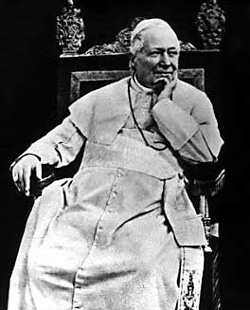
That opportunist was to be found in the person of Pius XI, Bishop of Rome. Pius had his own problems. He and his entourage were essentially prisoners within what eventually would become the nation state of Vatican City. His predecessors having lost the Papal States in the previous century, His Holiness’ temporal power was all but gone. And, in a bid to reassert his power, he established the Feast of Christ the King in 1925. The theology of the feast celebrated the Lordship of Christ over all humanity who owed him their undying allegiance. Fair enough. But Pius had other ideas too. Being Christ’s vicar on Earth, the allegiance was to be shown to him and his authority obeyed without question. After all, he WAS the Pope! The non-Catholic world just rolled their eyes and thumbed their noses at Pius. And Roman Catholics were happy to celebrate the feast, but as for the rest of it, they just smiled and said, “How nice, Your Holiness. Thanks for sharing,” and went on their merry ways as if nothing had happened.
And it’s no wonder that nobody took Pius seriously. Let’s face it: kings haven’t been a real success in the political business. From the Pharaohs to the Roman Emperors to the Czars to the monarchs of our own Tradition as Anglicans, kings in general have either been tyrants who oppressed their people to the ultimate degree or were just plain incompetent hedonists. The only monarchs worth their salt have been the women. Within our own Tradition, from Good Queen Bess, to Queen Anne, to the seemingly never-ending reign of Queen Victoria to the present occupant of the British throne, the women have, in comparison to the men, been a rousing success. They have been seen as the kind but strong mothers of their realms and healthy mothers always have their wellbeing of their children at heart. The metaphor of Christ as King just doesn’t work. First of all, Jesus came not to be a king but to give his life so that we might live abundantly. But to call this Feast the Feast of Christ the Queen might raise some eyebrows, or just make everyone laugh hysterically. So we won’t go there.
One such typical king was Edward the 8th who almost reigned over the British Empire in the 1930s. The issue, at least in the news papers, was that “David,” as he was known to the family, wanted to marry an American divorcee by the name of Mrs. Simpson. And according to Canon Law, the King could not be married to a divorced woman nor be divorced himself. So, the King would have to abdicate. Behind closed doors, the real truth was that David was an ardent admirer of the little square mustached dictator in Germany and wanted Britain to enter the coming war on the side of the Axis powers. Cosmo Lang, the Archbishop of Canterbury, an ardent loather of Hitler and National Socialism would have none of it. The divorce was a good excuse. But David would be a Nazi King over the Archbishop’s dead body. And so, things were diplomatically resolved and David and Mrs. Simpson were married and moved to France. In this case, “moved” means exiled.
This left his younger brother, George, to ascend the throne. Now, George, or Bertie as he was known to his family since one of his Christian names was Albert after his great-great grandfather, the Prince Consort to Queen Victoria, hadn’t been raised to assume royal duties as the King. He’d been raised to cut ribbons and christen ships and the last thing he really wanted was to be King of anything. He was an extreme introvert with a speech impediment who probably suffered from some sort of anxiety disorder which was neither diagnosed nor treated in those days. Fortunately, he’d married Elizabeth Bowes Lyons, the daughter of a Scottish aristocrat, who was a gracious and gregarious woman and whom we all grew to love as the Queen Mum. With their two daughters, one of which now sits on the British Throne to this day, before all the controversy their future was one of quiet royalty living in peace and doing things that the royals do. But now, this timid man with the stutter was to be King. And he wasn’t too happy about it. But, then, what could he do?
In September of 1940, the Luftwaffe began nightly air raids over London which lasted for eight months. At first, the raids had their benefit. Initially, the blitz was aimed at the industrial sections of London which had once been residential. Here were situated many Churches whose congregations had long since moved away. But by law, each Church still needed to be staffed by a paid Vicar. With the blitz, the Churches were gone and Archbishop Lang was relieved that his budget had been freed up a bit. But other than this, there were no benefits especially once the Luftwaffe began its onslaught upon the civilian population in residential districts. The devastation was massive and the cost in human lives unbearable. But each morning, the residents of London, with that stiff upper lip, would come up from the Underground and begin the process of cleaning up the mess and mourning the dead.
Now, you must know that the staff of Buckingham Palace is very tight lipped about what goes on within the Royal Family. They are very protective their employers but occasionally a story leaks out. The story is told that one night the bombings had been particularly fierce. Large residential areas lay smoldering in ruins. At 7 O’clock in the morning, the Queen entered the Royal Bed Chamber and said, “Bertie, there’s been a bombing. Bertie? Where are you?” The reply came, “I’m under the bed.” “What on earth are you doing there?” “I heard the bombs dropping and figured it was safer down here.” The valets coaxed his Majesty out from under the bed and as they began to get him dressed the Queen looked at him and said, “Now, Bertie, the people are bad off. They need us. They need you. You are their king. And we must be with them now. It won’t be easy for you, so you’ll have to be strong. It is our duty.” Bertie wasn’t thrilled but he knew his beloved wife was right. Within a half an hour, the Bentley was winding its way through the streets of London.
The news reels from that time are overwhelmingly moving. They show the Bentley driving into a street, the homes nothing more than heaps of smoldering bricks and broken glass. Finally the Bentley slows and stops. The chauffer emerges and opens the back passenger door. And the first thing you see is a white glove extended and a middle aged woman with a very big hat teeming with feathers gets out. Immediately she’s shaking hands with the locals, offering them her condolences and the comfort only a mother can give. And then, like a deer in the headlights, emerges a man in a long military coat and officer’s hat. It’s the King. His wife gently pulls him from the car and introduces him to her newly made friends. This is no photo op. This is real life. And the news reel ends with the Queen’s right arm over the shoulders of a local woman in an apron, her hair in a top not. The Queen is smiling, giving hope to those who really need it. And the King is there and he knows he is where he needs to be.
This is a monarch worthy of the metaphor of the Feast of Christ the King. This is a monarch worthy of this morning’s Gospel reading. Here is a monarch – the wife of a monarch really – willing to forgo the protocol of centuries to be with the least of these, the members of her family. And here is the queen, the power behind the throne, giving her husband the love and nurture he needs to be the King his people need him to be.
But there is no metaphor when it comes to the real image of Christ the King. It’s the truth. It’s fact which no one can doubt; that in the blitzes of our own lives, it is Christ the King, even Christ the Queen Mum, who comes to us and emerges from the Bentley and wraps her arms around us – and we are not alone. It is this King that meets us where we are, warts and all, who smiles at the camera and gives us the courage to meet the challenge of the present and move into the future with hope and love. And it is this King, this Christ, who calls us then to go into the world to feed the hungry and clothe the naked; to visit the prisoners and embrace the outcast; to love the unlovable and sit with the lonely; because we know that these people are not just people, but they are Christ himself.
Now that I think of it, and I’ve preached this sermon, maybe the Feast of Christ the King has something to it for King Jesus is no tyrant. Nor is he an opportunist trying to assert his power. No, this King Jesus rules with the iron rod of peace and mercy, of compassion and joy. This King Jesus comes down from the throne and not only dwells among us, but lives vibrantly within us. Look at the person seated next to you. She or he is Christ himself. Treat him or her as you would any great monarch. And when you are confronted with the poor and the neglected, the cranky and the sometimes unlovable, bow in deep respect for your are in the presence of your Lord, the One we know as Jesus Christ our Lord.
Amen.
WELCOME!
Welcome to my little blog of sermons and stories. I don't consider myself a "preacher." When I'm preached to, I fall asleep. zzzzzzzzzz. So do you! But if I hear a good story, I listen and chew on it until it sinks in. Kids tune out at lectures but they love stories...and we're all kids at heart.
So, set aside sin and guilt and all that institutional claptrap and sit back and revel in the love of God which has no strings attached. And always remember to laugh.
And for my sister and brother story tellers out there, remember plagiarism is the highest form of flattery. ;)
So, set aside sin and guilt and all that institutional claptrap and sit back and revel in the love of God which has no strings attached. And always remember to laugh.
And for my sister and brother story tellers out there, remember plagiarism is the highest form of flattery. ;)
Friday, December 30, 2011
Monday, July 4, 2011
3 July 2011 - Independence Day (Observed)
As you can tell by these fancy brocade duds, I’m a clergyman. But at heart, I’m an historian. I wound up in this vocation by my love of history. One of the things about history is that it’s written by the victors. History is therefore somewhat subjective. It’s always slanted. But every history has its dark side. From the pages of some obscure journal or other source, one can always find out what the vanquished experienced and from the stories of the victors and the vanquished, a more reasonable facsimile of the truth can emerge.
The American Revolution was a glorious cause. The tyranny and oppression of the British were over the top. The Revolution was long overdue. And yet, even our own Revolution had its dark side. We don’t hear about the atrocities inflicted by the Colonial Army. But they happened. They happen in every war, even for the most just cause.
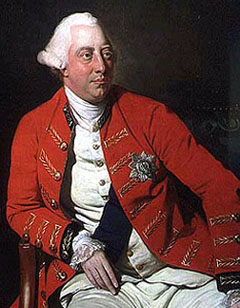
King George III
I suspect none of us learned in our history textbooks in school how the Church of England in the Colonies suffered. It did. Greatly. Our textbooks omit the fact that not just a few Anglican churches and rectories were burned to the ground, frequently with the occupant inside, by the Colonial troops and the property taken. We hear nothing of the Anglican priest slaughtered at their Communion Tables or those dragged from their high, three tiered pulpits and hanged in the Church yard. We hear little about the throngs of Anglicans, laity and clergy alike, who abandoned the Church during the Revolution for the Presbyterian and newly forming Methodist churches because they no longer wanted to be associated with the Crown. It’s one of the reasons those denominations have always been larger than us.
But when the dust settled and the British had finally gone home, what had been the Church of England in the Colonies was in shambles. There had been really not much organization. The colonial Church had been a missionary district of the Diocese of London and now with those ties broken there wasn’t even that. There were no bishops; just a large mass of demoralized and frightened men.
These men, the priests of the Church of England, took their lives very seriously. Ordination in those days was a pain in the neck. After one had been duly educated at one of the universities, arrangements were made in the autumn for the ordinations to take place. In the spring, after the weather had gotten nicer, these men were put on board ships to make the long, arduous and boring journey across the Atlantic where they docked at Portsmouth or Southampton. There they were met by carriages which took them north to St. Paul’s Cathedral in London where that evening they were ordained deacon and the next morning to the priesthood. Then they were packed back up into the carriages which headed south again to catch the ships and the next high tide. No time for the Tower of London and Big Ben was still not even a dream.
During these ordinations, each candidate took an oath to the death to the King who was, after all, the head of the Church. It was a sacred oath, one not taken lightly and to which each candidate owed his honor and his integrity. This was an oath as important as their marriage vows and could never be broken.
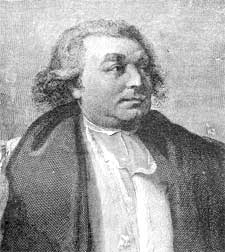
Bishop Seabury
In 1784, the Reverend Samuel Seabury, Rector of Christ Church, Hartford Connecticut, intimidated the local clergy into electing him their bishop. Seabury was an arrogant somebody and somewhat of a bully who made the long trip across the Atlantic to be consecrated bishop. But when he presented himself with all the testimonials to his fitness to be a Successor to the Apostles, the Bishop of London asked him if he would take the oath of allegiance to the King. Seabury replied, “Well, of course not!” The Bishop replied, “Then I cannot ordain you.” Then under his breath, the Bishop said, “But I know someone who can!”
So, The Reverend Mr. Seabury made his way north to Scotland to the Bishop of Aberdeen, a Bishop of the Scottish Episcopal Church, not to be confused with the Church of Scotland, that bastion of Calvinistic Presbyterian heresy which is a whole other sermon in itself! The Bishop of Aberdeen agreed to consecrate Seabury, but on two conditions: 1, that the new American Church be named after the Scottish Church – “Can’t very well go on calling it the “Church of England,” now can you”; and that the new American Church use the Communion of Liturgy of the Scottish Church rather than that of the Church of England. This was actually a blessing to us all since the Communion Liturgy of the Church of England is rather strange – one receives Communion in the middle of the Eucharistic Prayer after the Words of Institution. Go figure. Archbishop Cranmer must’ve been having a bad day. In any event, Mr. Seabury was consecrated and returned to Christ Church, Harford, now Christ Church Cathedral, as the Right Reverend Samuel Seabury, Bishop of Connecticut.
The next year, the Reverend William White, soon to be the first man actually elected by the Church as bishop, called for a conference of what was left of the Anglicans in what had been the Colonies to assemble at his parish Church, Christ Church, Philadelphia, to hammer out what an American Church might look like. Christ Church Cathedral still stands to this day and is a vibrant, active parish in the old part of Philadelphia. It’s an old Georgian building with galleries around three sides, painted white inside with clear glass windows and box pews. It’s gone rather High Church in the last two hundred years. Wonder what Bishop White would think of that? In any event, on a hot, July day in 1785, as many as could attend, filled Christ Church: the clergy on the main floor, the laity in the galleries. The clerk of the conference writes that the first day was total bedlam: those who had taken up the Revolutionary cause vs. those who had remained loyal to the Crown. Of course, it was all very polite. For instance, one clergyman would rise to respond to another by saying, “I would like to respond to my beloved Brother in Christ, the Heretic and Traitor from South Carolina…..” This would be followed by applause and booing and stomping and cat calls. (So much for English gentility!) By the end of the day, soon-to-be Bishop White was at his wits end. Nothing had been accomplished except division and fighting.
Christ Church Cathedral, Philadelphia
And the next day was none the better. After Morning Prayer, the proceeding were take up from the previous day which immediately turned into yet another pie fight. And it got nastier. It wasn’t pretty and Bishop White was by now pulling his hair out. Violence had not yet ensued, but it was well on the way.
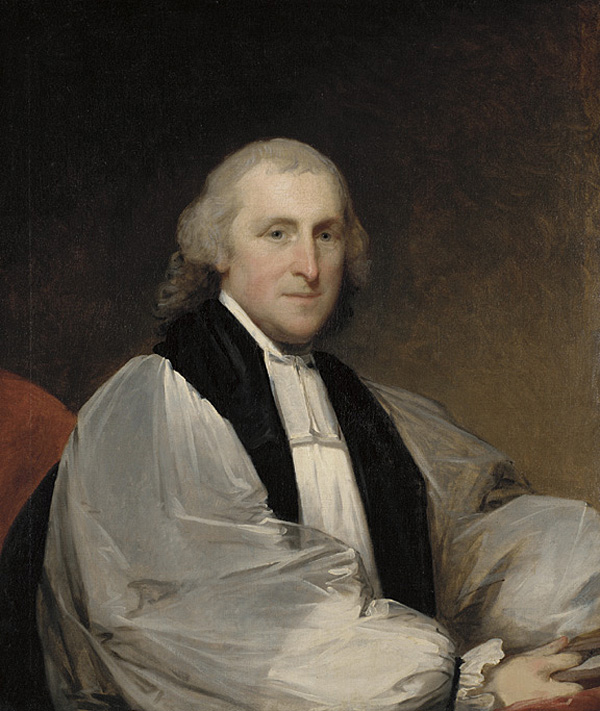
Bishop White
In the midst of this nightmare, the clerk handed Bishop White a note which said that the Reverend Mr. George Brown of New Hampshire wished to address the assembly. Bishop White must’ve thought, “What can it hurt?”
The Reverend George Brown was a nobody vicar from a small parish outside Concord, New Hampshire. He was short, fat and dumpy and beginning to go bald. While highly educated, he spoke with a stammer and was quite an introvert. But his parish adored him. What he lacked in physical attributes, he more than made up in abilities as a pastor.
Over the din, Bishop White yelled, “The Reverend Mr. Brown of New Hampshire has asked to address the conference.” Mr. Brown was seated in the back of the Church and began the long trek down the side isle, there is no central isle, of the Church. He bowed to the Communion Table and shook Bishop White’s hand and then began the long ascent into the three tiered pulpit. These pulpits were three-decker styled, the bottom for the “Clerke,” the middle for the Lay Reader and the top from which the sermon was preached. These were the days before public address systems and the pulpit was topped with a sounding board so everyone could, at least in theory, hear.
Mr. Brown looked out onto the sea of men in black and cleared his throat. He must’ve been petrified, but he mustered up some courage and began to speak: “August Gentlemen, I..” From the back, someone yelled, “LOUDER! WE CAN’T HEAR YOU!” That must’ve soothed Mr. Brown’s nerves! But he went on, a bit louder: “AUGUST GENTLEMEN, Fellow Clergymen, Laymen in the galleries, I have spent the last day and a half as a witness to these proceedings which have been painful and filled with much rancor. And I have searched the innermost workings of my heart to come to some resolution about the matter at hand. We are all men of integrity and high minds, now situated in what seems to have become a new nation. Some of us sided with the cause that has prevailed, all good men, men of integrity and pure heart. But I must admit that I have remained loyal to the Crown and continue to do so. I, as you, took a sacred oath, which in my own mind I cannot betray. And many of you have come to a different conclusion, one with which I do not agree, but which I honor, for you are all men of good will.
“But as I have sat and witnessed these proceedings, I have come to the firm conclusion that I cannot pledge my allegiance to Mr. Washington. And at the same time, I realize that I can no longer pledge my heart to King George. For neither George Washington nor George the Third took flesh of the Blessed Virgin and became one of us. Neither George went to the Cross and have his life for the sins of the world. It was Jesus. It was Christ himself who has called us, neither of the Georges, and it only to him that I can give my heart. And when I look at all of this in such a perspective, the rest becomes unimportant. And so I will continue a priest in whatever this Church is to be named, with only one oath, and that to Jesus Christ our Lord.” Mr. Brown paused, “I thank you.”
Mr. Brown descended the long staircase of the pulpit of Christ Church and began to return to his seat. And no one said a word. No one could. The only thing one could hear was the clopping of horseshoes against the cobblestone street outside. One could’ve heard a pin drop. No one coughed. No one rustled. Dead silence. And the silence continued for nearly five minutes – a silence filled with wordless awe and wonder.
After five minutes, Bishop White slowly stood and addressed the assembly: “Does anyone have anything further to contribute to this matter?” There was no response. Bishop White then asked them all to rise, opened the English Prayer Book and offered a collect, and then dismissed the assembly for lunch. “We will reconvene at two o’clock and take up the matter of a constitution.”
Tomorrow we will celebrate the 235th anniversary of the founding of this great nation. And much has changed in that time. We presently live in a nation divided, of anger and vehemence not unlike that assembly gathered in Christ Church on that hot July day of 1785. And we all think we’re right and we demonize those who might disagree with us. There is verbal warfare and adherence to ideologies that do nothing but continue to make things worse. And we all feel it to some degree. And we all have our opinions and our allegiances. Some of us are Republicans and some of us are Democrats. Some of us are screaming, left wing liberals and some of us are right wing conservatives. And I suspect if we took a poll in this Parish Church this morning, we’d find a mixed bag. And yet, the words of the Reverend Mr. Brown are as profound on this day as they were on that hot, July day so long ago. Because our true allegiance isn’t to the elephant or the donkey; it’s not to a cause for the left or the right; it’s not to a party or a person or even to the Church, but, as Christians, it is to Jesus Christ and to him alone. And when we are able to put things in such a perspective, then the Reverend Mr. Brown was right: the rest just doesn’t really matter.
We live in perilous times. If one watches the news, it’s not pretty out there and the future is one, big, giant question mark. We’re in a mess and there seem to be few viable roads out. But for us Christians, if we can keep in mind to whom we owe our ultimate allegiance and to whom we belong, then the future is not so daunting and in the midst of uncertainty and fear we can be beacons of light and hope not only to ourselves but to those who also need it. And if the worse happens, it will happen. And we will survive and thrive because we know who and whose we are.
So, tomorrow, as you slather your hot dogs with relish and salt your potato salad, and put on your parkas to go out and watch the clouds light up, give thanks for this great nation and pray for its future and its leaders. But, at a deeper level, remember to whom you owe your ultimate and willing allegiance. Remember who and whose you are. Remember the One who is our true and only hope; that One who, as the Reverend Mr. Brown said, took flesh of the Blessed Virgin and give his life for the world: Jesus Christ our Lord.
Amen.
The American Revolution was a glorious cause. The tyranny and oppression of the British were over the top. The Revolution was long overdue. And yet, even our own Revolution had its dark side. We don’t hear about the atrocities inflicted by the Colonial Army. But they happened. They happen in every war, even for the most just cause.
King George III
I suspect none of us learned in our history textbooks in school how the Church of England in the Colonies suffered. It did. Greatly. Our textbooks omit the fact that not just a few Anglican churches and rectories were burned to the ground, frequently with the occupant inside, by the Colonial troops and the property taken. We hear nothing of the Anglican priest slaughtered at their Communion Tables or those dragged from their high, three tiered pulpits and hanged in the Church yard. We hear little about the throngs of Anglicans, laity and clergy alike, who abandoned the Church during the Revolution for the Presbyterian and newly forming Methodist churches because they no longer wanted to be associated with the Crown. It’s one of the reasons those denominations have always been larger than us.
But when the dust settled and the British had finally gone home, what had been the Church of England in the Colonies was in shambles. There had been really not much organization. The colonial Church had been a missionary district of the Diocese of London and now with those ties broken there wasn’t even that. There were no bishops; just a large mass of demoralized and frightened men.
These men, the priests of the Church of England, took their lives very seriously. Ordination in those days was a pain in the neck. After one had been duly educated at one of the universities, arrangements were made in the autumn for the ordinations to take place. In the spring, after the weather had gotten nicer, these men were put on board ships to make the long, arduous and boring journey across the Atlantic where they docked at Portsmouth or Southampton. There they were met by carriages which took them north to St. Paul’s Cathedral in London where that evening they were ordained deacon and the next morning to the priesthood. Then they were packed back up into the carriages which headed south again to catch the ships and the next high tide. No time for the Tower of London and Big Ben was still not even a dream.
During these ordinations, each candidate took an oath to the death to the King who was, after all, the head of the Church. It was a sacred oath, one not taken lightly and to which each candidate owed his honor and his integrity. This was an oath as important as their marriage vows and could never be broken.
Bishop Seabury
In 1784, the Reverend Samuel Seabury, Rector of Christ Church, Hartford Connecticut, intimidated the local clergy into electing him their bishop. Seabury was an arrogant somebody and somewhat of a bully who made the long trip across the Atlantic to be consecrated bishop. But when he presented himself with all the testimonials to his fitness to be a Successor to the Apostles, the Bishop of London asked him if he would take the oath of allegiance to the King. Seabury replied, “Well, of course not!” The Bishop replied, “Then I cannot ordain you.” Then under his breath, the Bishop said, “But I know someone who can!”
So, The Reverend Mr. Seabury made his way north to Scotland to the Bishop of Aberdeen, a Bishop of the Scottish Episcopal Church, not to be confused with the Church of Scotland, that bastion of Calvinistic Presbyterian heresy which is a whole other sermon in itself! The Bishop of Aberdeen agreed to consecrate Seabury, but on two conditions: 1, that the new American Church be named after the Scottish Church – “Can’t very well go on calling it the “Church of England,” now can you”; and that the new American Church use the Communion of Liturgy of the Scottish Church rather than that of the Church of England. This was actually a blessing to us all since the Communion Liturgy of the Church of England is rather strange – one receives Communion in the middle of the Eucharistic Prayer after the Words of Institution. Go figure. Archbishop Cranmer must’ve been having a bad day. In any event, Mr. Seabury was consecrated and returned to Christ Church, Harford, now Christ Church Cathedral, as the Right Reverend Samuel Seabury, Bishop of Connecticut.
The next year, the Reverend William White, soon to be the first man actually elected by the Church as bishop, called for a conference of what was left of the Anglicans in what had been the Colonies to assemble at his parish Church, Christ Church, Philadelphia, to hammer out what an American Church might look like. Christ Church Cathedral still stands to this day and is a vibrant, active parish in the old part of Philadelphia. It’s an old Georgian building with galleries around three sides, painted white inside with clear glass windows and box pews. It’s gone rather High Church in the last two hundred years. Wonder what Bishop White would think of that? In any event, on a hot, July day in 1785, as many as could attend, filled Christ Church: the clergy on the main floor, the laity in the galleries. The clerk of the conference writes that the first day was total bedlam: those who had taken up the Revolutionary cause vs. those who had remained loyal to the Crown. Of course, it was all very polite. For instance, one clergyman would rise to respond to another by saying, “I would like to respond to my beloved Brother in Christ, the Heretic and Traitor from South Carolina…..” This would be followed by applause and booing and stomping and cat calls. (So much for English gentility!) By the end of the day, soon-to-be Bishop White was at his wits end. Nothing had been accomplished except division and fighting.
Christ Church Cathedral, Philadelphia
And the next day was none the better. After Morning Prayer, the proceeding were take up from the previous day which immediately turned into yet another pie fight. And it got nastier. It wasn’t pretty and Bishop White was by now pulling his hair out. Violence had not yet ensued, but it was well on the way.
Bishop White
In the midst of this nightmare, the clerk handed Bishop White a note which said that the Reverend Mr. George Brown of New Hampshire wished to address the assembly. Bishop White must’ve thought, “What can it hurt?”
The Reverend George Brown was a nobody vicar from a small parish outside Concord, New Hampshire. He was short, fat and dumpy and beginning to go bald. While highly educated, he spoke with a stammer and was quite an introvert. But his parish adored him. What he lacked in physical attributes, he more than made up in abilities as a pastor.
Over the din, Bishop White yelled, “The Reverend Mr. Brown of New Hampshire has asked to address the conference.” Mr. Brown was seated in the back of the Church and began the long trek down the side isle, there is no central isle, of the Church. He bowed to the Communion Table and shook Bishop White’s hand and then began the long ascent into the three tiered pulpit. These pulpits were three-decker styled, the bottom for the “Clerke,” the middle for the Lay Reader and the top from which the sermon was preached. These were the days before public address systems and the pulpit was topped with a sounding board so everyone could, at least in theory, hear.
Mr. Brown looked out onto the sea of men in black and cleared his throat. He must’ve been petrified, but he mustered up some courage and began to speak: “August Gentlemen, I..” From the back, someone yelled, “LOUDER! WE CAN’T HEAR YOU!” That must’ve soothed Mr. Brown’s nerves! But he went on, a bit louder: “AUGUST GENTLEMEN, Fellow Clergymen, Laymen in the galleries, I have spent the last day and a half as a witness to these proceedings which have been painful and filled with much rancor. And I have searched the innermost workings of my heart to come to some resolution about the matter at hand. We are all men of integrity and high minds, now situated in what seems to have become a new nation. Some of us sided with the cause that has prevailed, all good men, men of integrity and pure heart. But I must admit that I have remained loyal to the Crown and continue to do so. I, as you, took a sacred oath, which in my own mind I cannot betray. And many of you have come to a different conclusion, one with which I do not agree, but which I honor, for you are all men of good will.
“But as I have sat and witnessed these proceedings, I have come to the firm conclusion that I cannot pledge my allegiance to Mr. Washington. And at the same time, I realize that I can no longer pledge my heart to King George. For neither George Washington nor George the Third took flesh of the Blessed Virgin and became one of us. Neither George went to the Cross and have his life for the sins of the world. It was Jesus. It was Christ himself who has called us, neither of the Georges, and it only to him that I can give my heart. And when I look at all of this in such a perspective, the rest becomes unimportant. And so I will continue a priest in whatever this Church is to be named, with only one oath, and that to Jesus Christ our Lord.” Mr. Brown paused, “I thank you.”
Mr. Brown descended the long staircase of the pulpit of Christ Church and began to return to his seat. And no one said a word. No one could. The only thing one could hear was the clopping of horseshoes against the cobblestone street outside. One could’ve heard a pin drop. No one coughed. No one rustled. Dead silence. And the silence continued for nearly five minutes – a silence filled with wordless awe and wonder.
After five minutes, Bishop White slowly stood and addressed the assembly: “Does anyone have anything further to contribute to this matter?” There was no response. Bishop White then asked them all to rise, opened the English Prayer Book and offered a collect, and then dismissed the assembly for lunch. “We will reconvene at two o’clock and take up the matter of a constitution.”
Tomorrow we will celebrate the 235th anniversary of the founding of this great nation. And much has changed in that time. We presently live in a nation divided, of anger and vehemence not unlike that assembly gathered in Christ Church on that hot July day of 1785. And we all think we’re right and we demonize those who might disagree with us. There is verbal warfare and adherence to ideologies that do nothing but continue to make things worse. And we all feel it to some degree. And we all have our opinions and our allegiances. Some of us are Republicans and some of us are Democrats. Some of us are screaming, left wing liberals and some of us are right wing conservatives. And I suspect if we took a poll in this Parish Church this morning, we’d find a mixed bag. And yet, the words of the Reverend Mr. Brown are as profound on this day as they were on that hot, July day so long ago. Because our true allegiance isn’t to the elephant or the donkey; it’s not to a cause for the left or the right; it’s not to a party or a person or even to the Church, but, as Christians, it is to Jesus Christ and to him alone. And when we are able to put things in such a perspective, then the Reverend Mr. Brown was right: the rest just doesn’t really matter.
We live in perilous times. If one watches the news, it’s not pretty out there and the future is one, big, giant question mark. We’re in a mess and there seem to be few viable roads out. But for us Christians, if we can keep in mind to whom we owe our ultimate allegiance and to whom we belong, then the future is not so daunting and in the midst of uncertainty and fear we can be beacons of light and hope not only to ourselves but to those who also need it. And if the worse happens, it will happen. And we will survive and thrive because we know who and whose we are.
So, tomorrow, as you slather your hot dogs with relish and salt your potato salad, and put on your parkas to go out and watch the clouds light up, give thanks for this great nation and pray for its future and its leaders. But, at a deeper level, remember to whom you owe your ultimate and willing allegiance. Remember who and whose you are. Remember the One who is our true and only hope; that One who, as the Reverend Mr. Brown said, took flesh of the Blessed Virgin and give his life for the world: Jesus Christ our Lord.
Amen.
Thursday, June 2, 2011
The Feast of the Ascension
Link to the lessons
Mary Cunningham was my third grade Sunday School teacher and a woman who should be canonized for her tolerance and kindness. Through the years, I've been tempted to write an icon of her because, at least for me in retrospect, was a mirror into heaven.
Speaking of icons, in Mrs. Cunningham's Sunday School room hung those "icons" from the 1950s of various biblical scenes like Jesus and the little children, the Feeding of the Multitudes, and the like; icons which looked more like cartoons than religious depictions.
One Sunday morning, Mrs. Cunningham was working through her lesson plan when I, the intrepid question asker,, blurted out, "What's THAT?" pointing to one of the "icons" on the wall. It was a depiction of the Blessed Virgin in the middle with six men on each side of her all of whom were looking towards the top of the picture at a pair of feet which hung into the top of the picture. Mrs. Cunningham replied, "That's a picture of the Ascension." "Oh," I replied. "What's THAAAT?" "That's when Jesus went up into heaven after his Resurrection." "Oh, I replied, "Where's THAAAAT?" Mrs. Cunningham pointed upwards with her index finger. I looked up and all I saw were ceiling tiles. But for the moment, it shut me up. I didn't know what to say. Plus, I just figured that she meant "up theres." And Mrs. Cunningham's answer worked for many years until I got old enough to start asking theological questions.
As I matured, at least theologically, I also grew academically. The world view of those who lived in Jesus' time and long after believed that God lived beyond the dome of the sky which wasn't all that far up in the air. In the last half a millennium,we've come to know that the universe is vast and unending; that the earth is a rather insignificant planet in a rural solar system in a galaxy after which we've named a candy bar. Of course, even those assertions are constantly in flux. But we DO know that God doesn't live above the dome. And since our knowledge has grown, the idea of the Ascension as the Acts of the Apostles relates it means that Our Lord is still ascending....and to where, we don't know. Or...he may be in orbit, riding a satellite.
Scripture has its own "code" for certain things. The term "forty days" is a way of saying, "a significant amount of time." In other words, Noah was in the Ark for a significant amount of time as well as was Jesus in the desert. And from what we can tell, the Risen Christ appeared and was present with not all the disciples and the Apostles for some significant amount of time. But, eventually or all at once, the Risen One was not as present as previously experienced and eventually, his presence had entirely vanished.
Mary Cunningham was my third grade Sunday School teacher and a woman who should be canonized for her tolerance and kindness. Through the years, I've been tempted to write an icon of her because, at least for me in retrospect, was a mirror into heaven.
Speaking of icons, in Mrs. Cunningham's Sunday School room hung those "icons" from the 1950s of various biblical scenes like Jesus and the little children, the Feeding of the Multitudes, and the like; icons which looked more like cartoons than religious depictions.
One Sunday morning, Mrs. Cunningham was working through her lesson plan when I, the intrepid question asker,, blurted out, "What's THAT?" pointing to one of the "icons" on the wall. It was a depiction of the Blessed Virgin in the middle with six men on each side of her all of whom were looking towards the top of the picture at a pair of feet which hung into the top of the picture. Mrs. Cunningham replied, "That's a picture of the Ascension." "Oh," I replied. "What's THAAAT?" "That's when Jesus went up into heaven after his Resurrection." "Oh, I replied, "Where's THAAAAT?" Mrs. Cunningham pointed upwards with her index finger. I looked up and all I saw were ceiling tiles. But for the moment, it shut me up. I didn't know what to say. Plus, I just figured that she meant "up theres." And Mrs. Cunningham's answer worked for many years until I got old enough to start asking theological questions.
As I matured, at least theologically, I also grew academically. The world view of those who lived in Jesus' time and long after believed that God lived beyond the dome of the sky which wasn't all that far up in the air. In the last half a millennium,we've come to know that the universe is vast and unending; that the earth is a rather insignificant planet in a rural solar system in a galaxy after which we've named a candy bar. Of course, even those assertions are constantly in flux. But we DO know that God doesn't live above the dome. And since our knowledge has grown, the idea of the Ascension as the Acts of the Apostles relates it means that Our Lord is still ascending....and to where, we don't know. Or...he may be in orbit, riding a satellite.
Scripture has its own "code" for certain things. The term "forty days" is a way of saying, "a significant amount of time." In other words, Noah was in the Ark for a significant amount of time as well as was Jesus in the desert. And from what we can tell, the Risen Christ appeared and was present with not all the disciples and the Apostles for some significant amount of time. But, eventually or all at once, the Risen One was not as present as previously experienced and eventually, his presence had entirely vanished.
Subscribe to:
Posts (Atom)