WELCOME!

Welcome to my little blog of sermons and stories. I don't consider myself a "preacher." When I'm preached to, I fall asleep. zzzzzzzzzz. So do you! But if I hear a good story, I listen and chew on it until it sinks in. Kids tune out at lectures but they love stories...and we're all kids at heart.

So, set aside sin and guilt and all that institutional claptrap and sit back and revel in the love of God which has no strings attached. And always remember to laugh.

And for my sister and brother story tellers out there, remember plagiarism is the highest form of flattery. ;)

Saturday, March 10, 2012

The Cleansing of the Temple - Lent III

In the Name of the Father and of the Son and of the Holy Spirit.
Amen.

I have to admit that this morning’s Gospel makes me uncomfortable. Let’s face it: we’re Anglicans and as Anglicans we have a great tendency to see Jesus in a very positive light. I was raised with the images of Jesus in a field with children and sheep, or Jesus standing in solidarity with the poor and the marginalized: a kind and loving Jesus who taught us to love our enemies and pray for those who persecute us.

But the Jesus in this morning’s Gospel is none of those things.
He’s royally ticked! He’s angry and violent; a Jesus I don’t like to think about – a Jesus for whom the word “livid” is woefully inadequate – a Jesus in a rage that is neither forgiving nor compassionate.

Now, while I have some great discomfort with this portrayal of Our Lord, I have to admit that he had a point. The system within the Temple precincts was about as corrupt as one could get. The whole sacrificial system had been turned into a money-making scheme by the Priests, the Scribes and the Sadducees at the expense of the regular, ordinary go-to-Synagogue Jewish peasant.

But the sacrifices were deemed necessary to please God for a whole host of personal and public needs. In the olden days, one could bring ones animal to the Temple to be sacrificed. In those days, going to the Temple for a sacrifice was somewhat like going to the butcher shop and having a picnic. People took the animal with them to the Temple. Then the animal was slaughtered and, depending on the reason for the sacrifice, part of it was burned, the best part given to the Priest as payment and the rest roasted and returned to the one offering the Sacrifice who then prepared a large feast for the family and everyone enjoyed the leftovers. For lesser sacrifices, smaller animals were offered without the resulting picnic.

But as time went on, things got a bit more sinister. Rules and regulations about the quality of the animal began to be written. They had to be spotless and without blemish, or of a certain age. And for the ordinary Jewish peasant, especially for those living within cities, raising an animal for sacrifice wasn’t easy. One had to purchase an animal at the Temple to be subsequently dispatched.

Now, one couldn’t just walk into the Temple Court of the Gentiles and purchase an animal and then trot off to the Altar. First, one had to have the proper cash. The Temple authorities had devised a system through which only Temple currency was acceptable for the purchase of a sacrificial animal. Even the Jewish Shekel wasn’t acceptable. It was impure. So, one went to the money-changer within the Court of the Gentiles and exchanged one’s Shekels for Temple Money.

Now, of course, the money changers did their work for a fee but the fees were high. Not only did they have to make a living at this profession, they had to pay the Temple authorities for the privilege of their profession which meant that the exchange rate was exorbitant. And since the exchange rate was so high, most common ordinary Jewish peasants really couldn’t afford to offer sacrifices. And of course, the Temple Priests were pretty strict about the idea that if one couldn’t offer sacrifices, don’t count on God’s favor. Of course, this left the local peasantry feeling as if they were worth virtually nothing in God’s eyes.

And, so this is the Temple into which Jesus walks in the last week of his life. And he’s hunting for bear. He’s had enough. And with uncharacteristic violence and rage and a whole bunch of Aramaic four letter words, he wreaks mayhem and destruction within the Temple. And he makes his point: this Temple is to be a house of prayer, not the local Walmart.
Now, while I personally find this episode uncomfortable, I also find it profound. Nowhere else in the New Testament do we find Jesus reacting in such a visceral and disturbing manner. While the Priests and Scribes and the Pharisees and the Sadducees seemed to have their knickers in a twist about ritual purity, Jesus doesn’t seem to be concerned about it much if at all.

The woman caught in adultery and thrown at Jesus feet: he responds to her by saying, “Don’t do that. It’s degrading. You’re worth more than that.” He calls a tax-collector to be a member of his inner circle. The woman who bankrolls Jesus Inc. was once the possessed by seven demons. He has lunch with ladies of the evening and other such rabble – and in those days, to share a meal with someone was a sign of friendship. None of these people raise in Our Lord the ire, the sheer rage that is expressed in the Temple. As a matter of fact, there is no anger at all. Love? Compassion? Forgiveness? Yes. But no anger, no rage, no violence, no destruction.

The thing that seems to have sent Our Lord over the edge was those to whom power and authority had been entrusted, who then turned around and used that power and authority to oppress and degrade and control those lower on the societal ladder. This was the one thing that just sent him into orbit. And it scared the living daylights out of the Romans and the Big Whigs at the Temple. And so they decided to get rid of him, once and for all.

I look at the nation in which we live, in which we are citizens and then I look at this morning’s Gospel lesson. Not much has changed. I look at those coming out of the Clown Car the news people are calling Decision 2012 and radio talk show hosts and just shake my head. All of them call themselves devout Christians, but none of them seem to get it.

It seems impossible to me that in the 21st Century we’re having a national debate on whether women have the right to ask the insurance companies which they pay to assure that they will have health care just because a few men find their sensibilities offended. 

I find it incredible that in a city in which people are sleeping under overpasses and bridges and many in the south part of town don’t have enough to eat, or enough money to heat their homes, the local Archbishop is mustering his forces and all the cash he can just to insure that legislation granting same-sex couples the right to marry is overturned.
I myself have a visceral reaction every time I hear some politician refer to the poor and the needy as lazy parasites while allocating billions for the production of implements of war and assuring that their buddies don’t need to pay their fair share of taxes.
Tricky Ricky Santorum
What has become increasingly obvious is that if Jesus were physically present in human form rather than in just Bread and Wine, the episode in the Temple from this morning’s Gospel would look like a Sunday School picnic.

On one level, it’s easy to point out the inconsistencies of our own nation and society. It’s also easy, at least for me, to get my own knickers in a twist about the same things. And being aware of and responding to such things is what we as Christians are called to do in so far as we are physically, emotionally and spiritually able. And the Church gives us such readings in Lent to remind us of what was important to Jesus and what wasn’t.

But the hard part of Lent, at least for me, is to ask: in what ways is my own heart just like the Temple in the time of Jesus? How do I try to control or manipulate or degrade or oppress other people? Where do I fall short? What are my motives? And I have to admit that my motives are usually based in fear of the other and fear of the unknown.

And I also have to ask myself: in what ways to I try to be pure and upright and righteous not just for the sake of doing so and as a thanksgiving to God for the gift of life, but rather believing that such purity and righteousness will make God love me more, or so that others will think better of me than they might otherwise?

I find it easy to point the finger at political and public figures and find valid fault with their actions, but it’s much more difficult to point the finger at myself and realize that, though on not such a grand scale, I am no different.

But there is also a joy in Lent. A great joy; a joy based in the promise that when we find ourselves sitting in our own Temples and changing the money, there is One with us whose love for us is never in question – who has no desire to come in and throw over our money tables; there is a joy in the understanding that we are human and will never be perfect; there is great joy in the knowledge that God’s love for the human race and for ourselves as individuals isn’t based on what we do, but who we are: the beloved. And all of that changes everything.

What changes is that I begin to see those coming out of the Clown Car not as ignorant fools, but as my brothers and sisters just as worthy of God’s compassion as I am. I begin to see the Archbishop no longer as a mean-spirited prelate, but as a human being with fears and foibles just as I have my own fears and foibles and also as my brother.

I begin to know that those fellahs trying to drag my sisters back into the Victorian age, while totally clueless, are no less clueless than I am at times and that God’s love for them has never nor ever shall be, in doubt.

Lent began by Holy Mother Church calling us to the observance of a holy Lent, by self examination and repentance; by prayer, fasting, and self denial; and by reading and meditating on God’s holy Word. And she does so, in her wisdom, to remind us of our own humanity, that we are one community – globally, nationally, ethnically, culturally – and that we will never be perfect or get it right. She does so to remind us that being human is just fine and that we must rely on God to make up the difference. But she also, in her wisdom, calls us to lives of forgiveness and mercy, to lives of compassion and goodwill, not just for ourselves, but for those whose lives and values and mindsets might be totally different than our own.
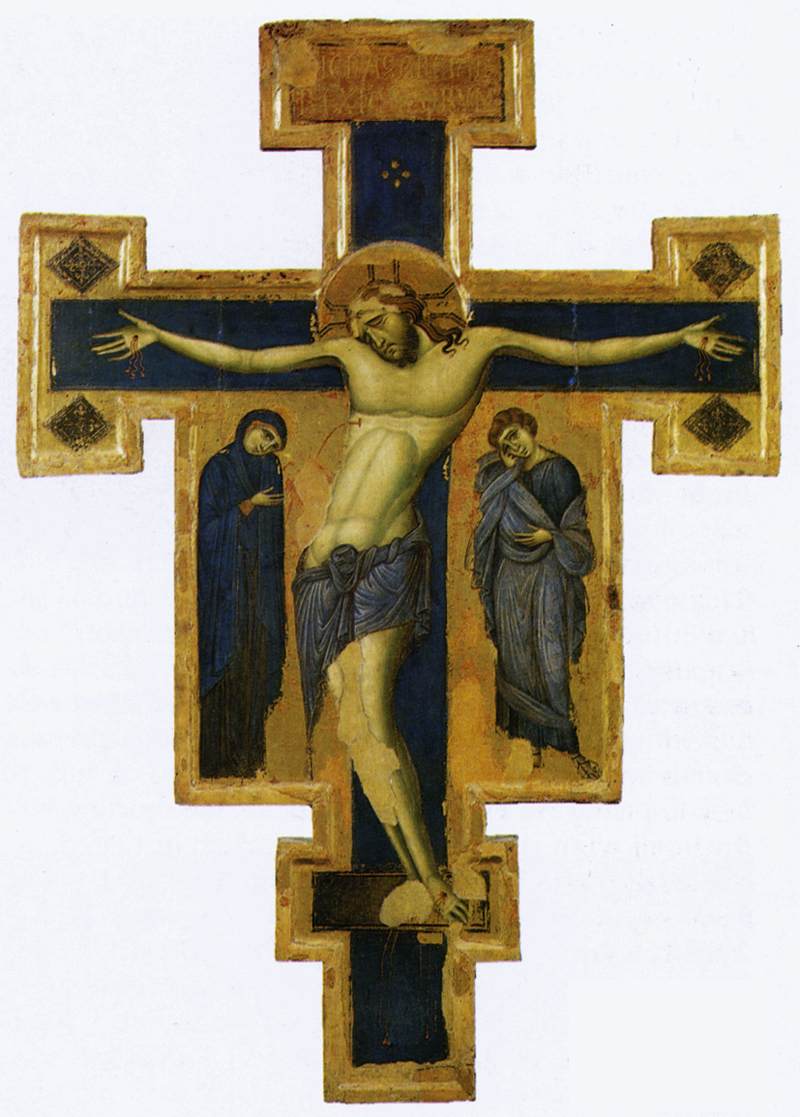
And why does she call us to such things? To remind us that even though we may be so very different from God, so incomplete, that we are and always have been God’s beloved; not just you and me, but all of us; and that we are to reach out to each other as each other’s beloved in Jesus Christ our Lord. 

Amen.


Friday, March 2, 2012

REQUIEM AETERNAM in CHARDON OHIO

On Thursday, 1 March 2012. about twenty souls gathered in St. Margaret's Chapel at Trinity Parish Church in Seattle - www.trinityseattle.org to celebrate a Requiem Mass for those killed in shootings at Chardon High School and the perpetrator of the crime.  This was the homily I delivered. 


In the Name of the Father, and of the Son and of the Holy Spirit.  Amen.

As I was drinking my coffee early this week, I opened the laptop and logged on to CNN.  What I saw on the screen scared me to death because my cousin is a school teacher in Cleveland, Ohio.  So, I immediately whipped off an email to her to see if she was OK.  Within a few minutes, I received a response telling me that she was fine...physically.  The school at which she works is one of the closer schools to Chardon High School.  Needless to say, she and everyone else in the area were in a state of shock, horror, disbelief and grief.  No one had expected anything like this.  When I asked her what we could do from this far away, she said, "Pray."  So, last night we did.

As I was preparing the liturgy for the Mass, my mind went to the Blessed Mother standing at the foot of the cross watching her first-born being brutally executed.  It is said that the death of a child is the worst grief one can ever experience, especially for the mother - for the child who had once been biologically a part of her own body.  My mind went to Our Lady sitting at the foot of the cross cradling the lifeless head of her son in her lap and wailing to the sky as the rain fell and lightening split the sky.  And she would not be comforted. 

Later that day, I received an email from a fellow clergyman asking why God can allow such things to occur.  Of course, she remarked, it isn't God's fault.  And she's right.  For better or for worse, we humans are built with a free will and sometimes that free will gets out of hand and we perpetrate the most hideous actions on one another.  And sometimes, it doesn't rear its ugly head until years, generations or centuries later.  But when it does, it's never pretty.  People are scarred for life and some just cease to exist.  The Twentieth Century is littered with such people.

And wondering where God was in all of this made me think.  If only God would come down out of the sky and fix all of this.  But, alas, such is not the nature of the Divine though we want it to be.  What I realized from my own life was that while God never comes down from the sky and fixes our lives, God is present...and in the midst of the carnage, we are not alone.  God is present with us giving us courage and hope and giving us the ability to give it to each other.  

I was drawn back to many years ago as a chaplain in the local county hospital.  I'd been assigned to the AIDS ward - lucky me.  It was during the days when the AIDS epidemic was just revving up and people were scared $#i+less - not just the straight folks, but the gay community as well.  

There was a young man there in his early thirties with whom I'd spoken once.  He was a nice guy, but soon went into a coma from which he never awoke.  Every day of his hospital visit, his mother would show up at 8am and stay until visiting hours were over.  In her hands were a set of well-worn Rosary beads which never left her hand.  As the days and weeks oozed by, I would sit in the room with the young man and his mother and the woman I got to know was one of the kindest people I've ever met.  And she loved her son - her only child - more than even life itself.  She was a good Roman Catholic and extremely devout, but she was convinced that His Holiness was wrong about gay people.  It wasn't what Jesus would've done.  So much for papal infallibility.

The day before the young man died, a woman walked into the room from the hall.  She was wearing a grey blouse and a grey sweater with a grey skirt, grey shoes and a grey over-coat.  It was winter.  Her hair was battle-ship grey as was her pallor.  She was the most lifeless living person I'd ever seen.  

She walked into the room about two steps, looked at the young an in the bed and then looked at his mother.  Then she said, with a sarcasm that could shatter glass, "Where the hell is your loving God now?"  The young man's mother didn't miss a beat.  This was her sister whom she knew to the core.  And with a smile on her face, she responded to this grey woman: "Sitting right here next to me, weeping with me."

Mrs. Grey turned around an left in a huff.  I couldn't say a thing.  But then, what else needed be said?

This kind, gracious woman taught me what Jesus had taught her...that in the midst of the most gut-wrenching of times, God is there.  But God isn't there to fix everything.  Rather God is there to give us the courage and the love and the compassion to do what we can and in many instances to be the Divine Light for someone for whom it seems to have gone out.  

As the days and weeks go by, those who must heal from this  - tragedy is too light of a word, but let's go with it - will not have their lives fixed.  It'll take time and for many the healing will only ever be partial.  And T.J. Lane and his family will live with this for the rest of their lives.  And yet, in the midst of such chaos and pain and suffering, they are not alone.  God is there whether they acknowledge Him/Her or not - God doesn't care about things like that.  And someday healing and reconciliation will come.  Things won't ever be the same as they were, but something new, vital and vibrant will emerge.

We celebrate this Mass this evening even though this event is not our own personal tragedy.  But, it's important that we celebrate it to remind ourselves that when our own personal tragedies come, and they surely will, we will not be alone.  Christ will be with us while we await resurrection.  

May the souls of the faithful departed through the mercies of God rest in peace.
And may light perpetual shine upon them. Amen.


Tuesday, February 28, 2012

A Sermon in Satire.
Der Pontifuherer ist hafink a bad day!
He just found out all the new Cardinals want PINK hats!

Monday, February 20, 2012

There has been some conversation about our Seattle friends of the Roman persuasion who seem to be rather ticked about Her latest stances about women, gay marriage, birth control and the like.  http://www.thestranger.com/seattle/mass-uprising/Content?oid=12587024  

So, the conversation has continued about the possibility of Episcopal priests celebrating the Roman Mass used before Advent 2011 for Roman Catholics no longer feeling welcome or comfortable in their own Church. This is not an attempt to steel sheep.  We're not trying to make converts nor are we trying to raise money. It's simply an attempt to provide the valid Eucharist to Roman Catholics by Episcopal Catholics without the homophobia, the misogyny, or the guilt.  


Your thoughs are welcome to phathyr@yahoo.com 

The Feast of the Epiphany

Well, I suspect that by now, you’ve taken down the tree
and the string with the Christmas Cards draped over it. 
The gifts have either been put in places of honor around the house
or been put in the “regift” box. 
Just remember who gave you what
so you don’t give the same gift back to the same person next year. 
It can be a bit embarrassing. 

But you might still have the Crèche up
with the wise men off in the distance
making their way to the holy site. 

And my suspicion is that the Turkey is on its last legs
      if even still around
and you won’t want another turkey sandwich until March. 
And I can’t blame ya. 
Turkey’s never been one of my favorites. 
Give me that old Prime Rib with the Yorkshire Pudding!  Mmmmm.

It seems hard to believe that just twelve short days ago
we filled this very Church to sing God’s praises
for the coming of the Word made Flesh
in the little Child of Bethlehem. 
But here we are – Wise Men and all –
celebrating the Epiphany of Our Lord. 


The story of the Wise Men, the Magi, as they were called,
      is endearing to us all. 
And how many different interpretations have we seen? 
Remember Amal and the Night Visitors by Gian Carlo Menotti?
Boy, was that a hit on NBC when I was a little kid. 
I remember years later seeing a Christmas Card
      on the front of which was the Three Wise Men at night
      with the stars shining in the sky
      and a dark silhouette of a long building off in the distance. 
On one end there was a dim, red light which said,
“Montgomery Ward” and on the other end, “Sears.” 
Inside, the card read, “A Mall and the Night Visitors.” 
Get it?! Guess you had to be three. 

There’s not a lot to know about the Three Wise Men, or the Magi,
except for the fact that the name Magi
is where we get the words “magic” and “magician.” 
These three fellahs were essentially priests of Zoroastrianism,
a religion founded by a guy named Zoroaster, believe it or not. 
The basic symbols of Zoroastrianism were similar to Christianity
especially when dealing with the concepts of darkness and light. 
About a million Zoroastrians still exist in Iran and Iraq
who worship just one God to this very day. 
The Magi were essentially astrologers. 
They watched the stars for the answers to all sorts of questions. 
But in the eyes of their far away Jewish neighbors,
      they were nothing more than quacks,
      seers of crystal balls, Tarot card readers. 
Remember Miss Cleo on the TV about ten years ago?
      “Caaall me now fer yer free readin’!” 
      Miss Cleo is still in jail for fraud, by the way. 
To the Jews, the Magi were an abomination unto the Lord.  Deuteronomy says,
When you come into the land that the Lord your God is giving you, you must not learn to imitate the abhorrent practices of those nations. No one shall be found among you who makes a son or daughter pass through fire, or who practices divination, or is a soothsayer, or an augur, or a sorcerer, or one who casts spells, or who consults ghosts or spirits, or who seeks oracles from the dead. For whoever does these things is abhorrent to the Lord; it is because of such abhorrent practices that the Lord your God is driving them out before you.
Apparently, Moses wasn’t too keen on the idea
and it got written in to the books. 

The other thing about the Magi is
      that they had some sort of official function during the sacrifices
      of Zoroastrian worship. 
It seems that they were the ones who recited the incantations
      while the poor animal was meeting its end. 
And they were paid – Gold. 
They also offered incense during the rite. 
And it also seems that they were in charge of seeing to the dead
and trying to contact them after their departure. 


And, as we all know,
      myrrh was the ancient version of embalming fluid. 
Let’s face it;
      among the Chosen People into whom Jesus was born,
      Magi were a total abomination. 
They were anathema to the religious authorities
      of the Jewish Nation and Faith –
      the ultimate heretics,
            and, as we all know, abominations unto the Lord. 
And such abominations always deserve death!

And yet, who is it that sees the star in the east? 
Naturally, astrologers! 
And they know it’s an important star they’ve seen. 
Historically, it may have been an alignment
      of the Earth, Jupiter and Saturn that occurred
      around that time in history. 
It may have been a super-nova or some other astronomical event. 
But the Magi saw it and it caught them by surprise
      because before they knew it,
      they had their camels and their caravan ready
      and were heading west. 

And what to their wondering eyes should appear,
      but a thirteen year old mother and her husband,
            older by ten years or so. 
And the child, now twelve days old,
      circumcised and a full-fledged Son of Abraham, Isaac and Jacob. 
Now, as most of you know,
      I’m no expert in children or child rearing,
            but I can think of more appropriate gifts for a new born. 
Well, maybe the gold is OK. 
      Seed money for a college fund or something like that. 
But Mary and Joseph don’t seem to be as picky. 
They welcome these three visitors from the far away East
      into the cave at Bethlehem and graciously accept their gifts. 
Mary lets them hold the baby and they pass him around. 
And Joseph, the proud father, just beams with delight. 
Had they existed back then,
      I suspect the Magi would’ve left with cigars!
And after a good visit, the Magi get back on their camels
      and call to their caravan and off they go into the night,
      back to the East from whence they’d come. 

Now, notice what doesn’t happen. 
While one can certainly imagine
      that such a visit to the Word made Flesh
      made an impression on the Magi,
            and it may have even transformed their lives for ever,
they return to the East still Zoroastrians
And they’re still the heretic Magi! 
The Blessed Mother didn’t ask for their conversion.
They are not Jews. 
They are not Christians, certainly. 
But they are God’s beloved,
just as they have always been. 
The mystery and miracle of the Epiphany
      is the manifestation of Christ to the world. 
The whole point of the Epiphany story,
      whether it’s based in history, legend or myth
is that within the economy of God’s Kingdom
      the list of who and what is an abomination
      is turned upside down. 
The point of the Epiphany is
      that the entire human race throughout history is a race of seekers
      seeking the Divine One
            who when they find this Divine One,
            embraces them with open arms. 
The great mystery of the Epiphany is
      that there are no abominations in God’s sight,
            at least not how we define them.
The true abominations are behaviors and actions of Herod,
      but he’s an entirely different sermon.

I have no doubt that the Magi on this very Epiphany night
in the year of our Lord 2012
are gazing into the mystery of the Christ Child
and have been for the last two thousand years. 
And I suspect that they’re still Zoroastrians
and that the Christ Child is just fine with that. 

Amen.

Friday, December 30, 2011

The Feast of Christ the King - Better Late than Never!

Theologians and Biblical scholars have noted that if one were to take three passages from the New Testament and discard the rest, one could still have the fullness of the teachings of the Gospel. The first is that great Hymn in the Prologue of the Gospel of St. John, “In the beginning was the Word and the Word was with God. And the Word was God. And the Word was made flesh and dwelt among us, full of grace and truth.”

The second is from the Eighth Chapter of St. Paul’s Epistle to the Romans where the Blessed, if not sometimes grumpy, Apostle says, “For I am convinced that neither life nor death, nor angels nor principalities, nor things present nor things to come, nor anything else in all creation will be able to separate us from the love of God in Christ Jesus our Lord.”

And the third is this morning’s Gospel, the separating of the sheep from the goats and that what we do to the least of the members of Christ’s family, in other words, all humanity, we do to him.

In many ways, it seems pointless to preach on this morning’s Gospel. No preacher can outdo our Lord in this wonderful passage. And, in our particular case, any preacher would be preaching to the Choir. This is a passage that we understand and that we as a community have taken to heart. And we do the best we can as individuals and as a community and leave the rest to the grace of God.


In some ways, it’s unfortunate that this wonderful Gospel is appointed for the Feast of Christ the King because the Feast of Christ the King is somewhat an oxymoron. Jesus didn’t come to be King. He came to serve and to give his life that we might live. The Feast itself has odious roots to begin with.

Some historians claim that the First World War was a family feud gone terribly bad. The Kaiser, the Czar and the King were all first cousins, grandsons of Her Glorious Majesty, Victoria, Queen of England, Scotland, Northern Ireland and Her Dominions, and Empress of India. When the smoke cleared after the most vicious and destructive war in human history up to that point, the Czar and his family were dead, the Kaiser was in exile in Holland, and the King’s empire less powerful than when the war had started. In November of 1918, Europe lay in ruins, refugees migrating here and there. Chaos ruled in many parts. New nation states were trying to form and well into the 1920s, the economic situation on the Continent was dire especially in what was left of Germany and the former Austro-Hungarian Empire of the Hapsburgs. All was ripe for an opportunist to come onto the scene and try to steal the show.


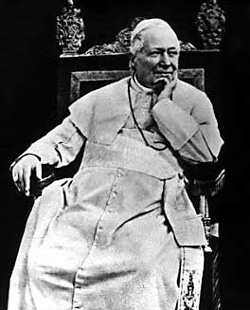
That opportunist was to be found in the person of Pius XI, Bishop of Rome. Pius had his own problems. He and his entourage were essentially prisoners within what eventually would become the nation state of Vatican City. His predecessors having lost the Papal States in the previous century, His Holiness’ temporal power was all but gone. And, in a bid to reassert his power, he established the Feast of Christ the King in 1925. The theology of the feast celebrated the Lordship of Christ over all humanity who owed him their undying allegiance. Fair enough. But Pius had other ideas too. Being Christ’s vicar on Earth, the allegiance was to be shown to him and his authority obeyed without question. After all, he WAS the Pope! The non-Catholic world just rolled their eyes and thumbed their noses at Pius. And Roman Catholics were happy to celebrate the feast, but as for the rest of it, they just smiled and said, “How nice, Your Holiness. Thanks for sharing,” and went on their merry ways as if nothing had happened.


And it’s no wonder that nobody took Pius seriously. Let’s face it: kings haven’t been a real success in the political business. From the Pharaohs to the Roman Emperors to the Czars to the monarchs of our own Tradition as Anglicans, kings in general have either been tyrants who oppressed their people to the ultimate degree or were just plain incompetent hedonists. The only monarchs worth their salt have been the women. Within our own Tradition, from Good Queen Bess, to Queen Anne, to the seemingly never-ending reign of Queen Victoria to the present occupant of the British throne, the women have, in comparison to the men, been a rousing success. They have been seen as the kind but strong mothers of their realms and healthy mothers always have their wellbeing of their children at heart. The metaphor of Christ as King just doesn’t work. First of all, Jesus came not to be a king but to give his life so that we might live abundantly. But to call this Feast the Feast of Christ the Queen might raise some eyebrows, or just make everyone laugh hysterically. So we won’t go there.

One such typical king was Edward the 8th who almost reigned over the British Empire in the 1930s. The issue, at least in the news papers, was that “David,” as he was known to the family, wanted to marry an American divorcee by the name of Mrs. Simpson. And according to Canon Law, the King could not be married to a divorced woman nor be divorced himself. So, the King would have to abdicate. Behind closed doors, the real truth was that David was an ardent admirer of the little square mustached dictator in Germany and wanted Britain to enter the coming war on the side of the Axis powers. Cosmo Lang, the Archbishop of Canterbury, an ardent loather of Hitler and National Socialism would have none of it. The divorce was a good excuse. But David would be a Nazi King over the Archbishop’s dead body. And so, things were diplomatically resolved and David and Mrs. Simpson were married and moved to France. In this case, “moved” means exiled.

This left his younger brother, George, to ascend the throne. Now, George, or Bertie as he was known to his family since one of his Christian names was Albert after his great-great grandfather, the Prince Consort to Queen Victoria, hadn’t been raised to assume royal duties as the King. He’d been raised to cut ribbons and christen ships and the last thing he really wanted was to be King of anything. He was an extreme introvert with a speech impediment who probably suffered from some sort of anxiety disorder which was neither diagnosed nor treated in those days. Fortunately, he’d married Elizabeth Bowes Lyons, the daughter of a Scottish aristocrat, who was a gracious and gregarious woman and whom we all grew to love as the Queen Mum. With their two daughters, one of which now sits on the British Throne to this day, before all the controversy their future was one of quiet royalty living in peace and doing things that the royals do. But now, this timid man with the stutter was to be King. And he wasn’t too happy about it. But, then, what could he do?

In September of 1940, the Luftwaffe began nightly air raids over London which lasted for eight months. At first, the raids had their benefit. Initially, the blitz was aimed at the industrial sections of London which had once been residential. Here were situated many Churches whose congregations had long since moved away. But by law, each Church still needed to be staffed by a paid Vicar. With the blitz, the Churches were gone and Archbishop Lang was relieved that his budget had been freed up a bit. But other than this, there were no benefits especially once the Luftwaffe began its onslaught upon the civilian population in residential districts. The devastation was massive and the cost in human lives unbearable. But each morning, the residents of London, with that stiff upper lip, would come up from the Underground and begin the process of cleaning up the mess and mourning the dead.


Now, you must know that the staff of Buckingham Palace is very tight lipped about what goes on within the Royal Family. They are very protective their employers but occasionally a story leaks out. The story is told that one night the bombings had been particularly fierce. Large residential areas lay smoldering in ruins. At 7 O’clock in the morning, the Queen entered the Royal Bed Chamber and said, “Bertie, there’s been a bombing. Bertie? Where are you?” The reply came, “I’m under the bed.” “What on earth are you doing there?” “I heard the bombs dropping and figured it was safer down here.” The valets coaxed his Majesty out from under the bed and as they began to get him dressed the Queen looked at him and said, “Now, Bertie, the people are bad off. They need us. They need you. You are their king. And we must be with them now. It won’t be easy for you, so you’ll have to be strong. It is our duty.” Bertie wasn’t thrilled but he knew his beloved wife was right. Within a half an hour, the Bentley was winding its way through the streets of London.

The news reels from that time are overwhelmingly moving. They show the Bentley driving into a street, the homes nothing more than heaps of smoldering bricks and broken glass. Finally the Bentley slows and stops. The chauffer emerges and opens the back passenger door. And the first thing you see is a white glove extended and a middle aged woman with a very big hat teeming with feathers gets out. Immediately she’s shaking hands with the locals, offering them her condolences and the comfort only a mother can give. And then, like a deer in the headlights, emerges a man in a long military coat and officer’s hat. It’s the King. His wife gently pulls him from the car and introduces him to her newly made friends. This is no photo op. This is real life. And the news reel ends with the Queen’s right arm over the shoulders of a local woman in an apron, her hair in a top not. The Queen is smiling, giving hope to those who really need it. And the King is there and he knows he is where he needs to be.


This is a monarch worthy of the metaphor of the Feast of Christ the King. This is a monarch worthy of this morning’s Gospel reading. Here is a monarch – the wife of a monarch really – willing to forgo the protocol of centuries to be with the least of these, the members of her family. And here is the queen, the power behind the throne, giving her husband the love and nurture he needs to be the King his people need him to be.

But there is no metaphor when it comes to the real image of Christ the King. It’s the truth. It’s fact which no one can doubt; that in the blitzes of our own lives, it is Christ the King, even Christ the Queen Mum, who comes to us and emerges from the Bentley and wraps her arms around us – and we are not alone. It is this King that meets us where we are, warts and all, who smiles at the camera and gives us the courage to meet the challenge of the present and move into the future with hope and love. And it is this King, this Christ, who calls us then to go into the world to feed the hungry and clothe the naked; to visit the prisoners and embrace the outcast; to love the unlovable and sit with the lonely; because we know that these people are not just people, but they are Christ himself.


Now that I think of it, and I’ve preached this sermon, maybe the Feast of Christ the King has something to it for King Jesus is no tyrant. Nor is he an opportunist trying to assert his power. No, this King Jesus rules with the iron rod of peace and mercy, of compassion and joy. This King Jesus comes down from the throne and not only dwells among us, but lives vibrantly within us. Look at the person seated next to you. She or he is Christ himself. Treat him or her as you would any great monarch. And when you are confronted with the poor and the neglected, the cranky and the sometimes unlovable, bow in deep respect for your are in the presence of your Lord, the One we know as Jesus Christ our Lord.

Amen.