

PHATHYR'S SERMONS AND STORIES Sermons and Stories by an Episcopal Priest in drizzly, damp Seattle. Send emails to Phathyr@gmail.com.
Monday, March 26, 2012

Saturday, March 10, 2012
The Cleansing of the Temple - Lent III
In the Name of the Father and of the
Son and of the Holy Spirit.
Amen.
I have to admit that this morning’s
Gospel makes me uncomfortable. Let’s face it: we’re Anglicans and as Anglicans
we have a great tendency to see Jesus in a very positive light. I was raised
with the images of Jesus in a field with children and sheep, or Jesus standing
in solidarity with the poor and the marginalized: a kind and loving Jesus who
taught us to love our enemies and pray for those who persecute us.
But the Jesus in this morning’s
Gospel is none of those things.
He’s royally ticked! He’s angry and
violent; a Jesus I don’t like to think about – a Jesus for whom the word “livid”
is woefully inadequate – a Jesus in a rage that is neither forgiving nor
compassionate.

But the sacrifices were deemed
necessary to please God for a whole host of personal and public needs. In the
olden days, one could bring ones animal to the Temple to be sacrificed. In
those days, going to the Temple for a sacrifice was somewhat like going to the
butcher shop and having a picnic. People took the animal with them to the
Temple. Then the animal was slaughtered and, depending on the reason for the
sacrifice, part of it was burned, the best part given to the Priest as payment and
the rest roasted and returned to the one offering the Sacrifice who then
prepared a large feast for the family and everyone enjoyed the leftovers. For
lesser sacrifices, smaller animals were offered without the resulting picnic.
But as time went on, things got a bit
more sinister. Rules and regulations about the quality of the animal began to
be written. They had to be spotless and without blemish, or of a certain age. And
for the ordinary Jewish peasant, especially for those living within cities, raising
an animal for sacrifice wasn’t easy. One had to purchase an animal at the
Temple to be subsequently dispatched.
Now, one couldn’t just walk into the
Temple Court of the Gentiles and purchase an animal and then trot off to the
Altar. First, one had to have the proper cash. The Temple authorities had
devised a system through which only Temple currency was acceptable for the
purchase of a sacrificial animal. Even the Jewish Shekel wasn’t acceptable. It
was impure. So, one went to the money-changer within the Court of the Gentiles and
exchanged one’s Shekels for Temple Money.
Now, of course, the money changers
did their work for a fee but the fees were high. Not only did they have to make
a living at this profession, they had to pay the Temple authorities for the
privilege of their profession which meant that the exchange rate was exorbitant.
And since the exchange rate was so high, most common ordinary Jewish peasants really
couldn’t afford to offer sacrifices. And of course, the Temple Priests were
pretty strict about the idea that if one couldn’t offer sacrifices, don’t count
on God’s favor. Of course, this left the local peasantry feeling as if they
were worth virtually nothing in God’s eyes.
And, so this is the Temple into which
Jesus walks in the last week of his life. And he’s hunting for bear. He’s had enough. And with uncharacteristic violence
and rage and a whole bunch of Aramaic four letter words, he wreaks mayhem and destruction
within the Temple. And he makes his point: this Temple is to be a house of
prayer, not the local Walmart.
 Now, while I personally find this
episode uncomfortable, I also find it profound. Nowhere else in the New
Testament do we find Jesus reacting in such a visceral and disturbing manner. While
the Priests and Scribes and the Pharisees and the Sadducees seemed to have
their knickers in a twist about ritual purity, Jesus doesn’t seem to be
concerned about it much if at all.

 The woman caught in adultery and
thrown at Jesus feet: he responds to her by saying, “Don’t do that. It’s
degrading. You’re worth more than that.” He calls a tax-collector to be a
member of his inner circle. The woman who bankrolls Jesus Inc. was once the possessed
by seven demons. He has lunch with ladies of the evening and other such rabble –
and in those days, to share a meal with someone was a sign of friendship. None
of these people raise in Our Lord the ire, the sheer rage that is expressed in
the Temple. As a matter of fact, there is no anger at all. Love? Compassion? Forgiveness?
Yes. But no anger, no rage, no violence, no destruction.
The thing that seems to have sent Our
Lord over the edge was those to whom power and authority had been entrusted, who
then turned around and used that power and authority to oppress and degrade and
control those lower on the societal ladder. This was the one thing that just
sent him into orbit. And it scared the living daylights out of the Romans and
the Big Whigs at the Temple. And so they decided to get rid of him, once and
for all.
I look at the nation in which we
live, in which we are citizens and then I look at this morning’s Gospel lesson.
Not much has changed. I look at those coming out of the Clown Car the news
people are calling Decision 2012 and radio talk show hosts and just shake my
head. All of them call themselves devout Christians, but none of them seem to
get it.

It seems impossible to me that in the
21st Century we’re having a national debate on whether women have
the right to ask the insurance companies which they pay to assure that they
will have health care just because a few men find their sensibilities
offended.
 I find it incredible that in a city in which people are sleeping
under overpasses and bridges and many in the south part of town don’t have
enough to eat, or enough money to heat their homes, the local Archbishop is
mustering his forces and all the cash he can just to insure that legislation
granting same-sex couples the right to marry is overturned.


I myself have a visceral reaction every
time I hear some politician refer to the poor and the needy as lazy parasites while
allocating billions for the production of implements of war and assuring that
their buddies don’t need to pay their fair share of taxes.
 |
| Tricky Ricky Santorum |
What has become increasingly obvious is
that if Jesus were physically present in human form rather than in just Bread
and Wine, the episode in the Temple from this morning’s Gospel would look like
a Sunday School picnic.
On one level, it’s easy to point out
the inconsistencies of our own nation and society. It’s also easy, at least for
me, to get my own knickers in a twist about the same things. And being aware of
and responding to such things is what we as Christians are called to do in so
far as we are physically, emotionally and spiritually able. And the Church
gives us such readings in Lent to remind us of what was important to Jesus and
what wasn’t.
But the hard part of Lent, at least
for me, is to ask: in what ways is my own heart
just like the Temple in the time of Jesus? How do I try to control or
manipulate or degrade or oppress other people? Where do I fall short? What are
my motives? And I have to admit that my motives are usually based in fear of
the other and fear of the unknown.
And I also have to ask myself: in
what ways to I try to be pure and upright and righteous not just for the sake
of doing so and as a thanksgiving to God for the gift of life, but rather believing
that such purity and righteousness will make God love me more, or so that
others will think better of me than they might otherwise?
I find it easy to point the finger at
political and public figures and find valid fault with their actions, but it’s
much more difficult to point the finger at myself and realize that, though on
not such a grand scale, I am no different.
But there is also a joy in Lent. A
great joy; a joy based in the promise that when we find ourselves sitting in
our own Temples and changing the money, there is One with us whose love for us
is never in question – who has no desire to come in and throw over our money
tables; there is a joy in the understanding that we are human and will never be
perfect; there is great joy in the knowledge that God’s love for the human race
and for ourselves as individuals isn’t based on what we do, but who we are: the
beloved. And all of that changes everything.
What changes is that I begin to see
those coming out of the Clown Car not as ignorant fools, but as my brothers and
sisters just as worthy of God’s compassion as I am. I begin to see the
Archbishop no longer as a mean-spirited prelate, but as a human being with
fears and foibles just as I have my own fears and foibles and also as my
brother.
I begin to know that those fellahs
trying to drag my sisters back into the Victorian age, while totally clueless, are
no less clueless than I am at times and that God’s love for them has never nor
ever shall be, in doubt.
Lent began by Holy Mother Church
calling us to the observance of a holy Lent, by self examination and
repentance; by prayer, fasting, and self denial; and by reading and meditating
on God’s holy Word. And she does so, in her wisdom, to remind us of our own
humanity, that we are one community – globally, nationally, ethnically,
culturally – and that we will never be perfect or get it right. She does so to
remind us that being human is just fine and that we must rely on God to make up
the difference. But she also, in her wisdom, calls us to lives of forgiveness
and mercy, to lives of compassion and goodwill, not just for ourselves, but for
those whose lives and values and mindsets might be totally different than our
own.
Amen.
Friday, March 2, 2012
REQUIEM AETERNAM in CHARDON OHIO

In the Name of the Father, and of the Son and of the Holy Spirit. Amen.
As I was drinking my coffee early this week, I opened the laptop and logged on to CNN. What I saw on the screen scared me to death because my cousin is a school teacher in Cleveland, Ohio. So, I immediately whipped off an email to her to see if she was OK. Within a few minutes, I received a response telling me that she was fine...physically. The school at which she works is one of the closer schools to Chardon High School. Needless to say, she and everyone else in the area were in a state of shock, horror, disbelief and grief. No one had expected anything like this. When I asked her what we could do from this far away, she said, "Pray." So, last night we did.
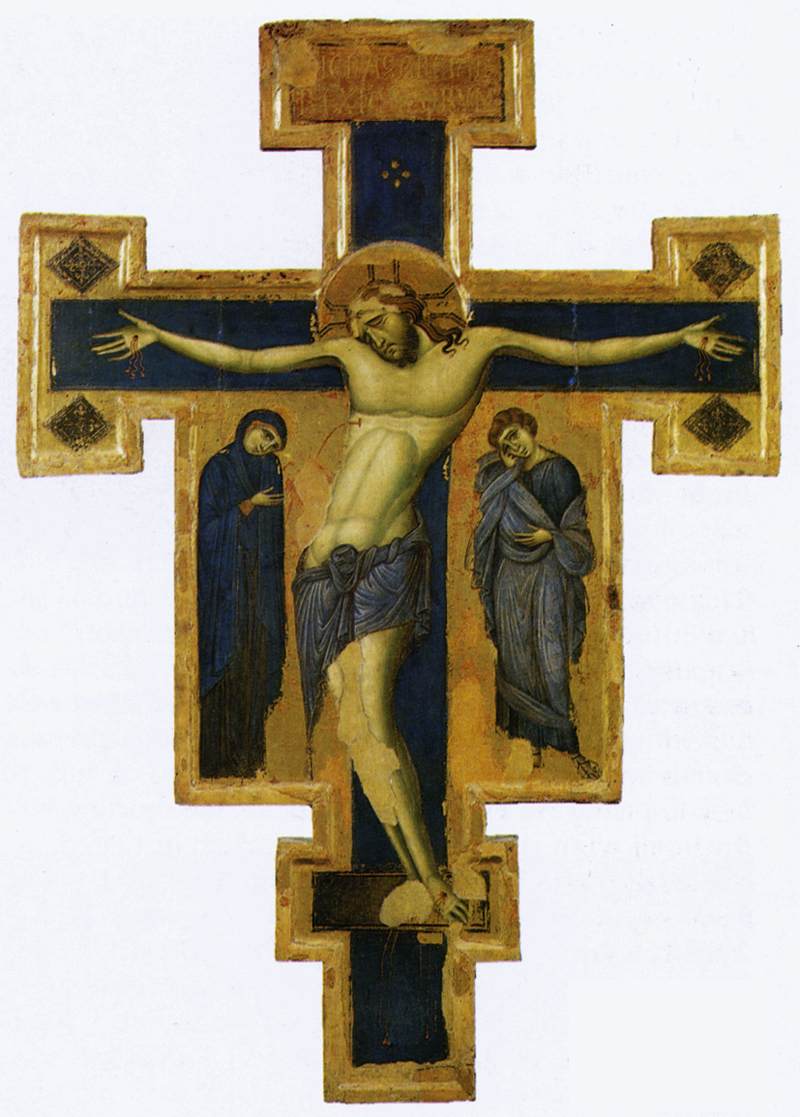
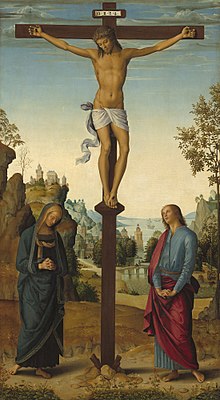 As I was preparing the liturgy for the Mass, my mind went to the Blessed Mother standing at the foot of the cross watching her first-born being brutally executed. It is said that the death of a child is the worst grief one can ever experience, especially for the mother - for the child who had once been biologically a part of her own body. My mind went to Our Lady sitting at the foot of the cross cradling the lifeless head of her son in her lap and wailing to the sky as the rain fell and lightening split the sky. And she would not be comforted.
Later that day, I received an email from a fellow clergyman asking why God can allow such things to occur. Of course, she remarked, it isn't God's fault. And she's right. For better or for worse, we humans are built with a free will and sometimes that free will gets out of hand and we perpetrate the most hideous actions on one another. And sometimes, it doesn't rear its ugly head until years, generations or centuries later. But when it does, it's never pretty. People are scarred for life and some just cease to exist. The Twentieth Century is littered with such people.
And wondering where God was in all of this made me think. If only God would come down out of the sky and fix all of this. But, alas, such is not the nature of the Divine though we want it to be. What I realized from my own life was that while God never comes down from the sky and fixes our lives, God is present...and in the midst of the carnage, we are not alone. God is present with us giving us courage and hope and giving us the ability to give it to each other.
I was drawn back to many years ago as a chaplain in the local county hospital. I'd been assigned to the AIDS ward - lucky me. It was during the days when the AIDS epidemic was just revving up and people were scared $#i+less - not just the straight folks, but the gay community as well.
 There was a young man there in his early thirties with whom I'd spoken once. He was a nice guy, but soon went into a coma from which he never awoke. Every day of his hospital visit, his mother would show up at 8am and stay until visiting hours were over. In her hands were a set of well-worn Rosary beads which never left her hand. As the days and weeks oozed by, I would sit in the room with the young man and his mother and the woman I got to know was one of the kindest people I've ever met. And she loved her son - her only child - more than even life itself. She was a good Roman Catholic and extremely devout, but she was convinced that His Holiness was wrong about gay people. It wasn't what Jesus would've done. So much for papal infallibility.
The day before the young man died, a woman walked into the room from the hall. She was wearing a grey blouse and a grey sweater with a grey skirt, grey shoes and a grey over-coat. It was winter. Her hair was battle-ship grey as was her pallor. She was the most lifeless living person I'd ever seen.
She walked into the room about two steps, looked at the young an in the bed and then looked at his mother. Then she said, with a sarcasm that could shatter glass, "Where the hell is your loving God now?" The young man's mother didn't miss a beat. This was her sister whom she knew to the core. And with a smile on her face, she responded to this grey woman: "Sitting right here next to me, weeping with me."
Mrs. Grey turned around an left in a huff. I couldn't say a thing. But then, what else needed be said?
This kind, gracious woman taught me what Jesus had taught her...that in the midst of the most gut-wrenching of times, God is there. But God isn't there to fix everything. Rather God is there to give us the courage and the love and the compassion to do what we can and in many instances to be the Divine Light for someone for whom it seems to have gone out.
As the days and weeks go by, those who must heal from this - tragedy is too light of a word, but let's go with it - will not have their lives fixed. It'll take time and for many the healing will only ever be partial. And T.J. Lane and his family will live with this for the rest of their lives. And yet, in the midst of such chaos and pain and suffering, they are not alone. God is there whether they acknowledge Him/Her or not - God doesn't care about things like that. And someday healing and reconciliation will come. Things won't ever be the same as they were, but something new, vital and vibrant will emerge.
 We celebrate this Mass this evening even though this event is not our own personal tragedy. But, it's important that we celebrate it to remind ourselves that when our own personal tragedies come, and they surely will, we will not be alone. Christ will be with us while we await resurrection.
May the souls of the faithful departed through the mercies of God rest in peace.
And may light perpetual shine upon them. Amen.
Tuesday, February 28, 2012

Monday, February 20, 2012

So, the conversation has continued about the possibility of Episcopal priests celebrating the Roman Mass used before Advent 2011 for Roman Catholics no longer feeling welcome or comfortable in their own Church. This is not an attempt to steel sheep. We're not trying to make converts nor are we trying to raise money. It's simply an attempt to provide the valid Eucharist to Roman Catholics by Episcopal Catholics without the homophobia, the misogyny, or the guilt.

Your thoughs are welcome to phathyr@yahoo.com
The Feast of the Epiphany
Well, I suspect that by now,
you’ve taken down the tree
and the string with the
Christmas Cards draped over it.
The gifts have either been
put in places of honor around the house
or been put in the “regift”
box.
Just remember who gave you
what
so you don’t give the same
gift back to the same person next year.
It can be a bit
embarrassing.
But you might still have the
Crèche up
with the wise men off in the
distance
making their way to the holy
site.
And my suspicion is that the
Turkey is on its last legs
if even still around
and you won’t want another
turkey sandwich until March.
And I can’t blame ya.
Turkey’s never been one of
my favorites.
Give me that old Prime Rib
with the Yorkshire Pudding! Mmmmm.
It seems hard to believe that
just twelve short days ago
we filled this very Church
to sing God’s praises
for the coming of the Word
made Flesh
in the little Child of
Bethlehem.
But here we are – Wise Men
and all –
celebrating the Epiphany of
Our Lord.
The story of the Wise Men,
the Magi, as they were called,
is endearing to us all.
And how many different
interpretations have we seen?
Remember Amal and the Night
Visitors by Gian Carlo Menotti?
Boy, was that a hit on NBC
when I was a little kid.
I remember years later
seeing a Christmas Card
on the front of which was the Three Wise Men at night
with the stars shining in the sky
and a dark silhouette of a long building off in the distance.
On one end there was a dim,
red light which said,
“Montgomery Ward” and on the
other end, “Sears.”
Inside, the card read, “A
Mall and the Night Visitors.”
Get it?! Guess you had to be
three.
There’s not a lot to know
about the Three Wise Men, or the Magi,
except for
the fact that the name Magi
is where we
get the words “magic” and “magician.”
These three fellahs were
essentially priests of Zoroastrianism,
a religion
founded by a guy named Zoroaster, believe it or not.
The basic symbols of
Zoroastrianism were similar to Christianity
especially when
dealing with the concepts of darkness and light.
About a million Zoroastrians
still exist in Iran and Iraq
who worship
just one God to this very day.
The Magi were essentially
astrologers.
They watched the stars for
the answers to all sorts of questions.
But in the eyes of their far
away Jewish neighbors,
they were nothing more than quacks,
seers of crystal balls, Tarot card readers.
Remember Miss Cleo on the TV
about ten years ago?
“Caaall me now fer yer free readin’!”
Miss Cleo is still in jail for fraud, by the way.
To the Jews, the Magi were
an abomination unto the Lord. Deuteronomy
says,
When you come into the land
that the Lord your God is giving you, you must not learn
to imitate the abhorrent practices of those nations. No one shall be found
among you who makes a son or daughter pass through fire, or who practices
divination, or is a soothsayer, or an augur, or a sorcerer, or one who casts
spells, or who consults ghosts or spirits, or who seeks oracles from the dead.
For whoever does these things is abhorrent to the Lord;
it is because of such abhorrent practices that the Lord
your God is driving them out before you.
Apparently, Moses wasn’t too
keen on the idea
and it got written in to the
books.
The other thing about the
Magi is
that they had some sort of official function during the
sacrifices
of Zoroastrian worship.
It seems that they were the
ones who recited the incantations
while the poor animal was meeting its end.
And they were paid –
Gold.
They also offered incense
during the rite.
And it also seems that they
were in charge of seeing to the dead
and trying to contact them
after their departure.
And, as we all know,
myrrh was the ancient version of embalming fluid.
Let’s face it;
among the Chosen People into whom Jesus was born,
Magi were a total abomination.
They were anathema to the
religious authorities
of the Jewish Nation and Faith –
the ultimate heretics,
and, as we all know, abominations unto the Lord.
And such abominations always
deserve death!
And yet, who is it that sees
the star in the east?
Naturally, astrologers!
And they know it’s an
important star they’ve seen.
Historically, it may have
been an alignment
of the Earth, Jupiter and Saturn that occurred
around that time in history.
It may have been a
super-nova or some other astronomical event.
But the Magi saw it and it
caught them by surprise
because before they knew it,
they had their camels and their caravan ready
and were heading west.
And what to their wondering
eyes should appear,
but a thirteen year old mother and her husband,
older by ten years or so.
And the child, now twelve
days old,
circumcised and a full-fledged Son of Abraham, Isaac and
Jacob.
Now, as most of you know,
I’m no expert in children or child rearing,
but I can think of more appropriate gifts for a new
born.
Well, maybe the gold is
OK.
Seed money for a college fund or something like that.
But Mary and Joseph don’t
seem to be as picky.
They welcome these three
visitors from the far away East
into the cave at Bethlehem and graciously accept their
gifts.
Mary lets them hold the baby
and they pass him around.
And Joseph, the proud
father, just beams with delight.
Had they existed back then,
I suspect the Magi would’ve left with cigars!
And after a good visit, the
Magi get back on their camels
and call to their caravan and off they go into the night,
back to the East from whence they’d come.
Now, notice what doesn’t
happen.
While one can certainly
imagine
that such a visit to the Word made Flesh
made an impression on the Magi,
and it may have even transformed their lives for ever,
they return to the East still
Zoroastrians!
And they’re still the
heretic Magi!
The Blessed Mother didn’t
ask for their conversion.
They are not Jews.
They are not Christians,
certainly.
But they are God’s beloved,
just as they have always
been.
The mystery and miracle of
the Epiphany
is the manifestation of Christ to the world.
The whole point of the
Epiphany story,
whether it’s based in history, legend or myth
is that within the economy
of God’s Kingdom
the list of who and what is an abomination
is turned upside down.
The point of the Epiphany is
that the entire human race throughout history is a race of
seekers
seeking the Divine One
who when they find this Divine One,
embraces them with open arms.
The great mystery of the
Epiphany is
that there are no abominations in God’s sight,
at least not how we define them.
The true abominations are
behaviors and actions of Herod,
but he’s an entirely different sermon.
I have no doubt that the
Magi on this very Epiphany night
in the year of our Lord 2012
are gazing into the mystery
of the Christ Child
and have been for the last
two thousand years.
And I suspect that they’re
still Zoroastrians
and that the Christ Child is
just fine with that.
Amen.
Wednesday, February 15, 2012


Subscribe to:
Posts (Atom)